
Corporate Giving, One Year Later: Restoring Volcanic Soil on Jeju Island
A community-led soil restoration project featured in AmorePacific's 2025 Sustainability Report
What does corporate giving look like when it actually brings land back?
In 2025, Code of Nature won A MORE Impact Spark, the impact investment program run by Korean beauty group AmorePacific, and took on a soil restoration project at Geumoreum on Jeju Island. We ran it alongside MYSC, the Innisfree Moeum Foundation, and Seogwipo High School.
AmorePacific featured the project in the social contribution section of its 2025 Holdings Sustainability Report.
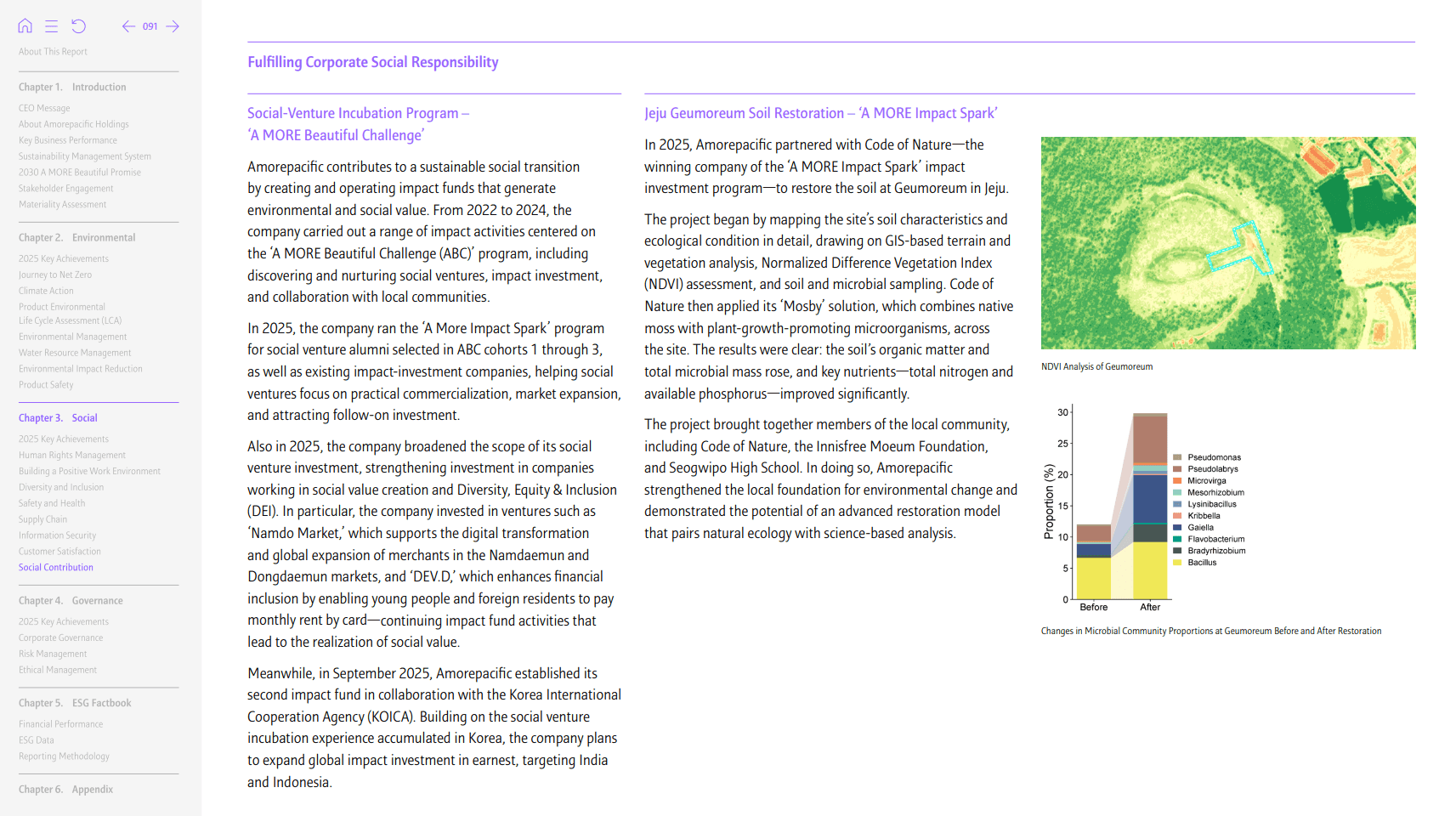
That's one page in a report. Here's what it looked like on the ground — and where the land stands a year later.
On 24 August 2025, students from Seogwipo High School worked through every stage of the restoration themselves. Four steps, one day.
Why Geumoreum
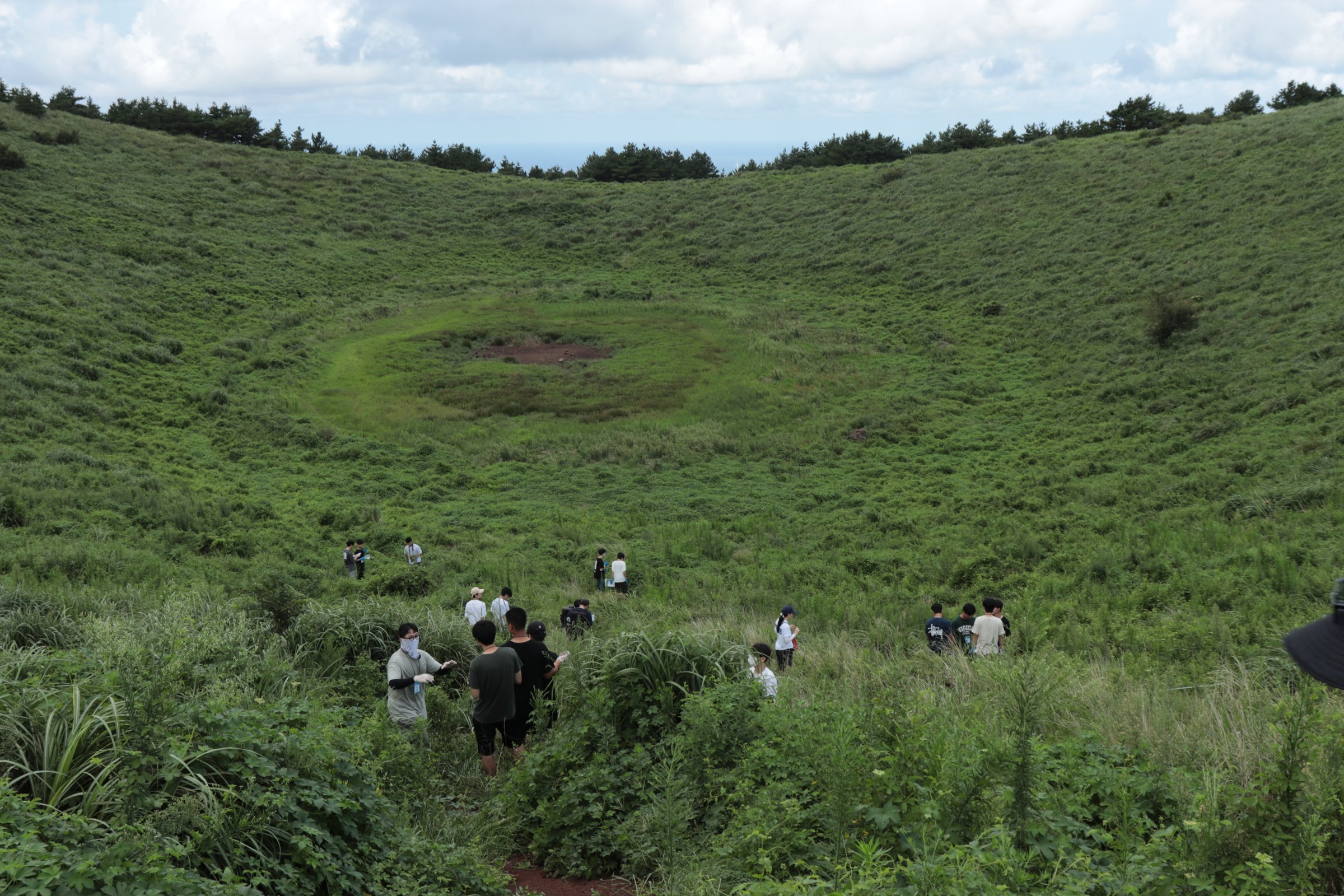
Geumoreum rises above Geumak-ri, on the western side of Jeju. It's an oreum — one of the hundreds of small volcanic cones scattered across the island — and one of the few with a lake in its summit crater. When water gathers there, islanders call it Geumakdam. The place has been treated as sacred for generations.
It was also coming apart underfoot. Years of footsteps had pressed the ground hard. Where the topsoil had worn through, the red scoria beneath lay bare. Nothing could root there anymore.
Compacted ground holds neither water nor nutrients, and you can't fix that by laying fresh soil over the top. The ground itself had to be made capable of recovering.
So we went at it biologically, using moss native to Jeju and microbes drawn from the site's own soil. And we brought the students in to do the work.
STEP 1. Know what you're spraying before you spray it
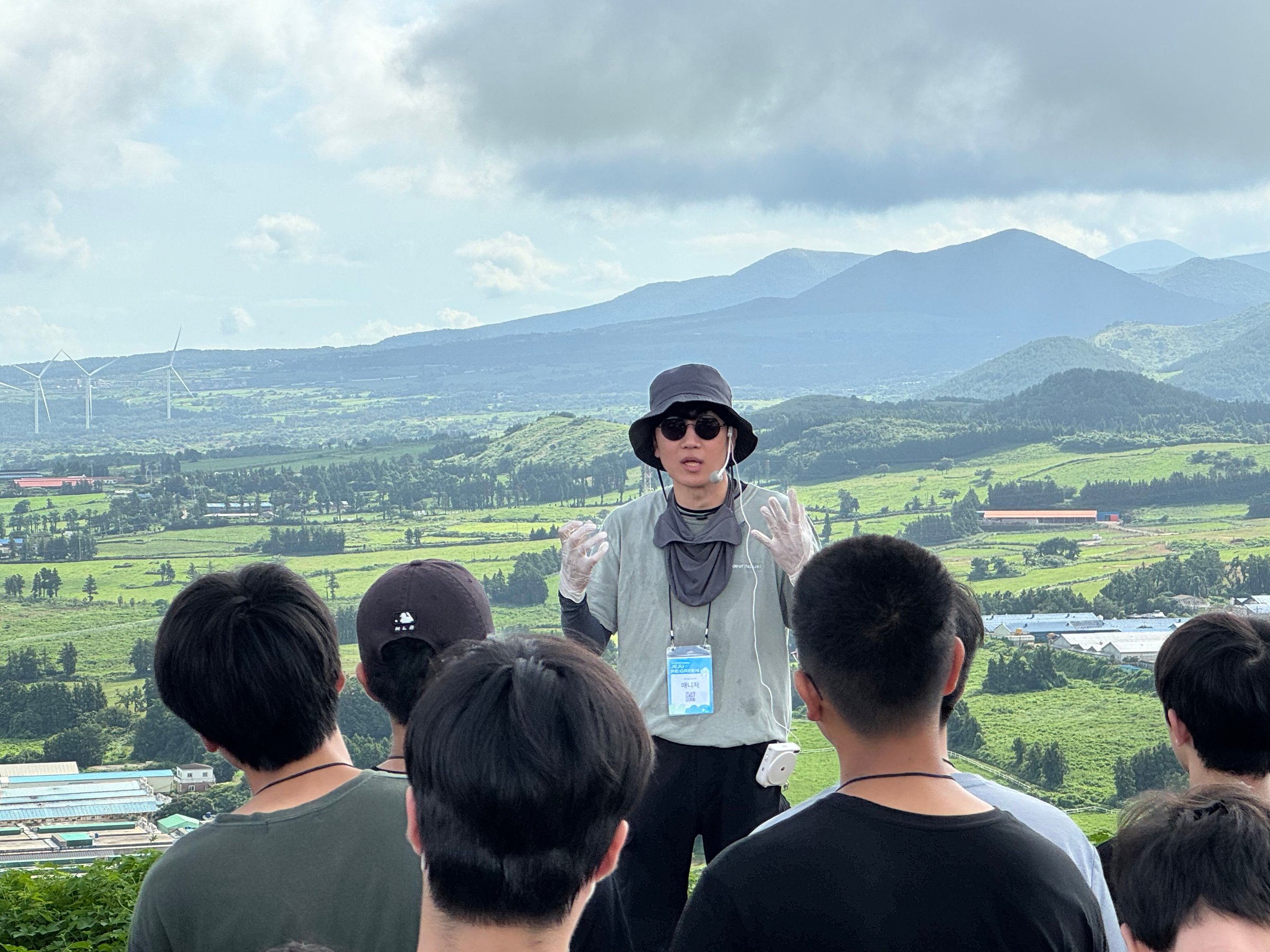
The day started with the material itself.
Students went through what MOSBY is, why we use Racomitrium — a moss native to Jeju — and how spraying it lets ground recover on its own instead of sealing it under a hard cover.
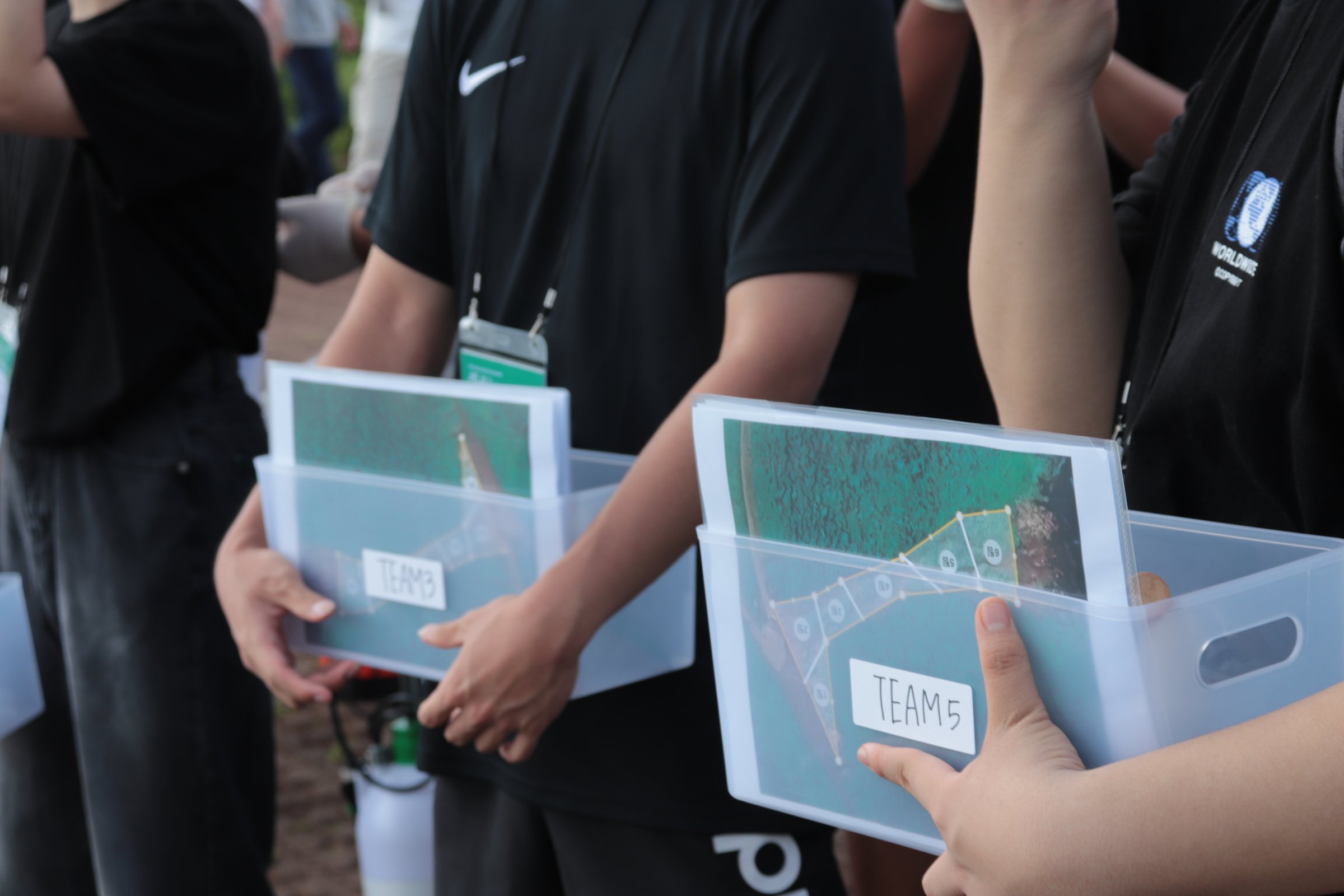
Then they checked the kit: moss spores, nutrient solution, microbial culture, sprayers. Understand it first, spray it second.
STEP 2. Find out what the soil is missing
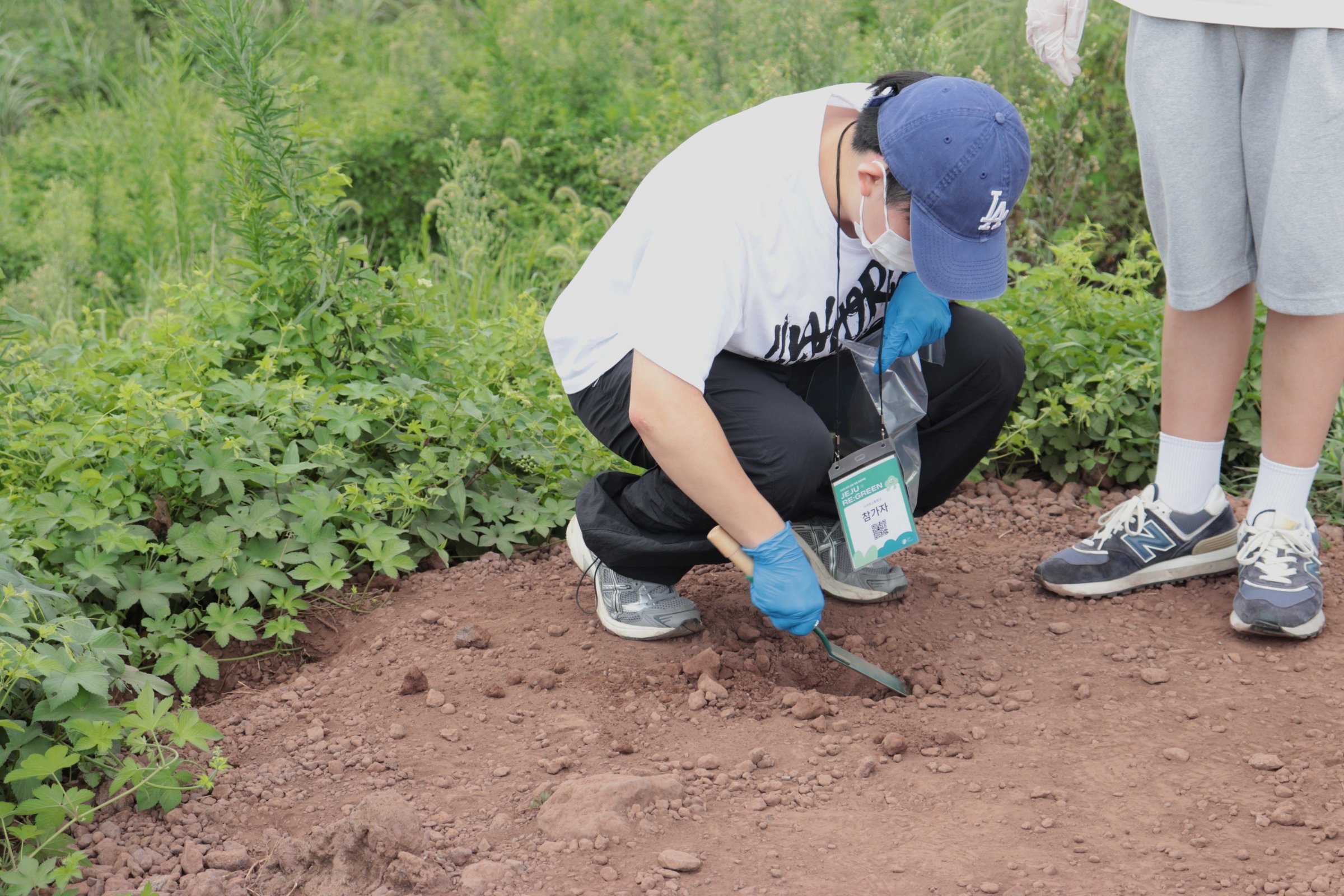
Spraying is only half the job.
You also have to know what's in the ground and what's drained out of it. Otherwise you're guessing at what to put back.
The students found out by hand — gloves on, lifting topsoil, testing its hardness between their fingers.
STEP 3. Mix the moss with the microbes
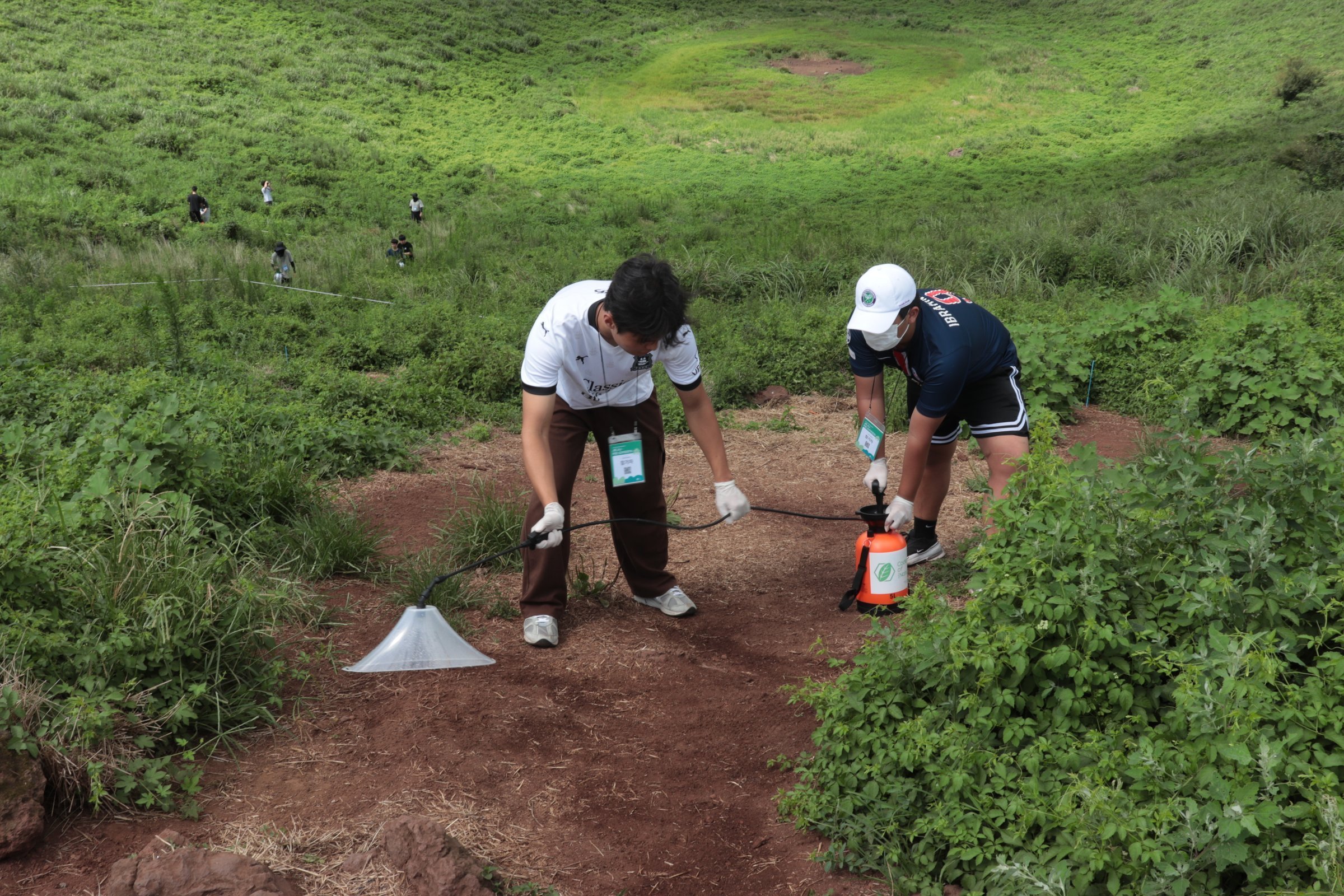
This was the main event.
Students mixed MOSBY nutrient solution to the specified ratio and sprayed the stripped, sloping sections. Then came the microbes, cultured from Geumoreum's own soil. Nothing imported — the point is to bring back what already lived here.
Moss spores take weeks to establish, so there was nothing to see by the end of the day. That's the nature of the work.
STEP 4. Record what's already growing
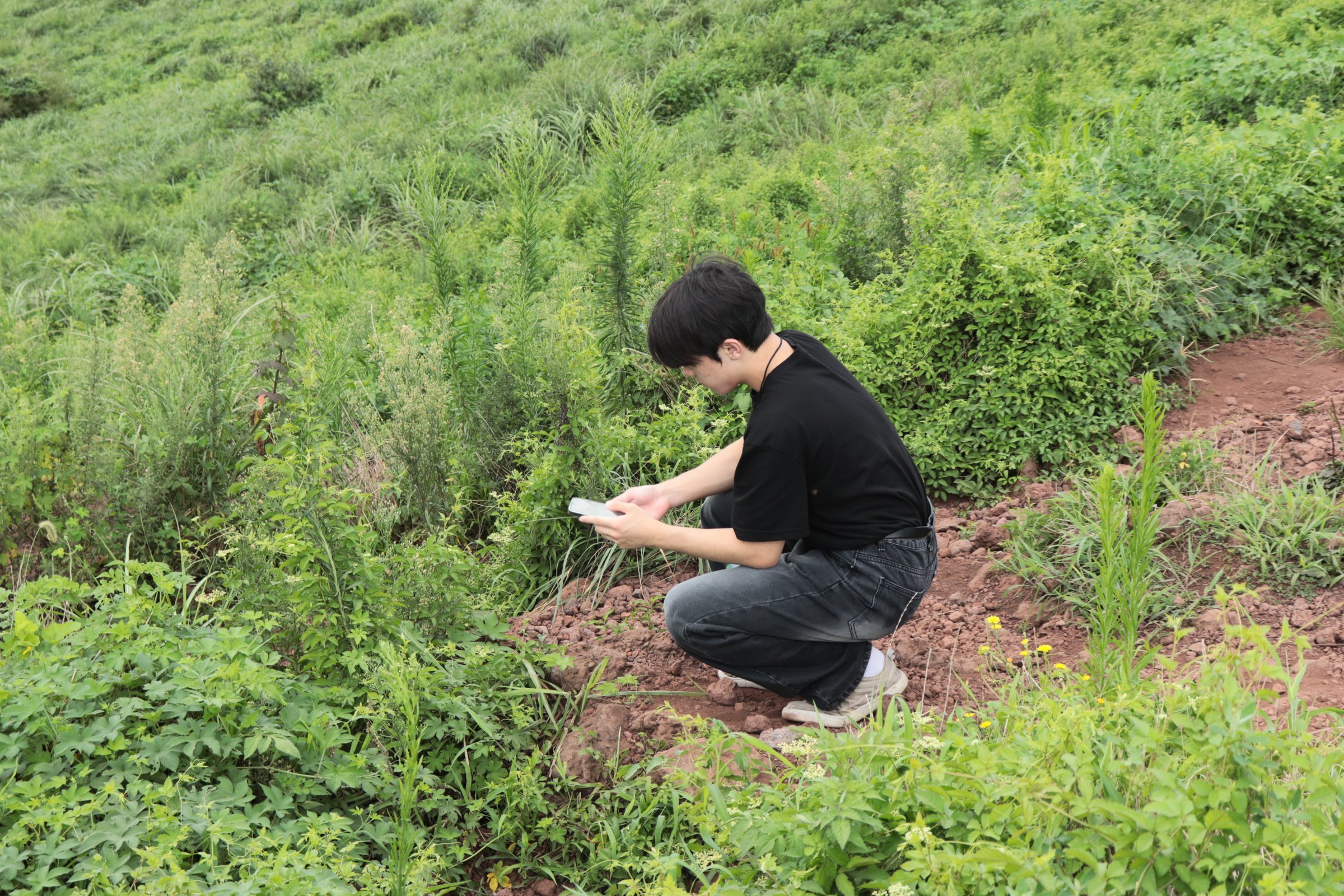
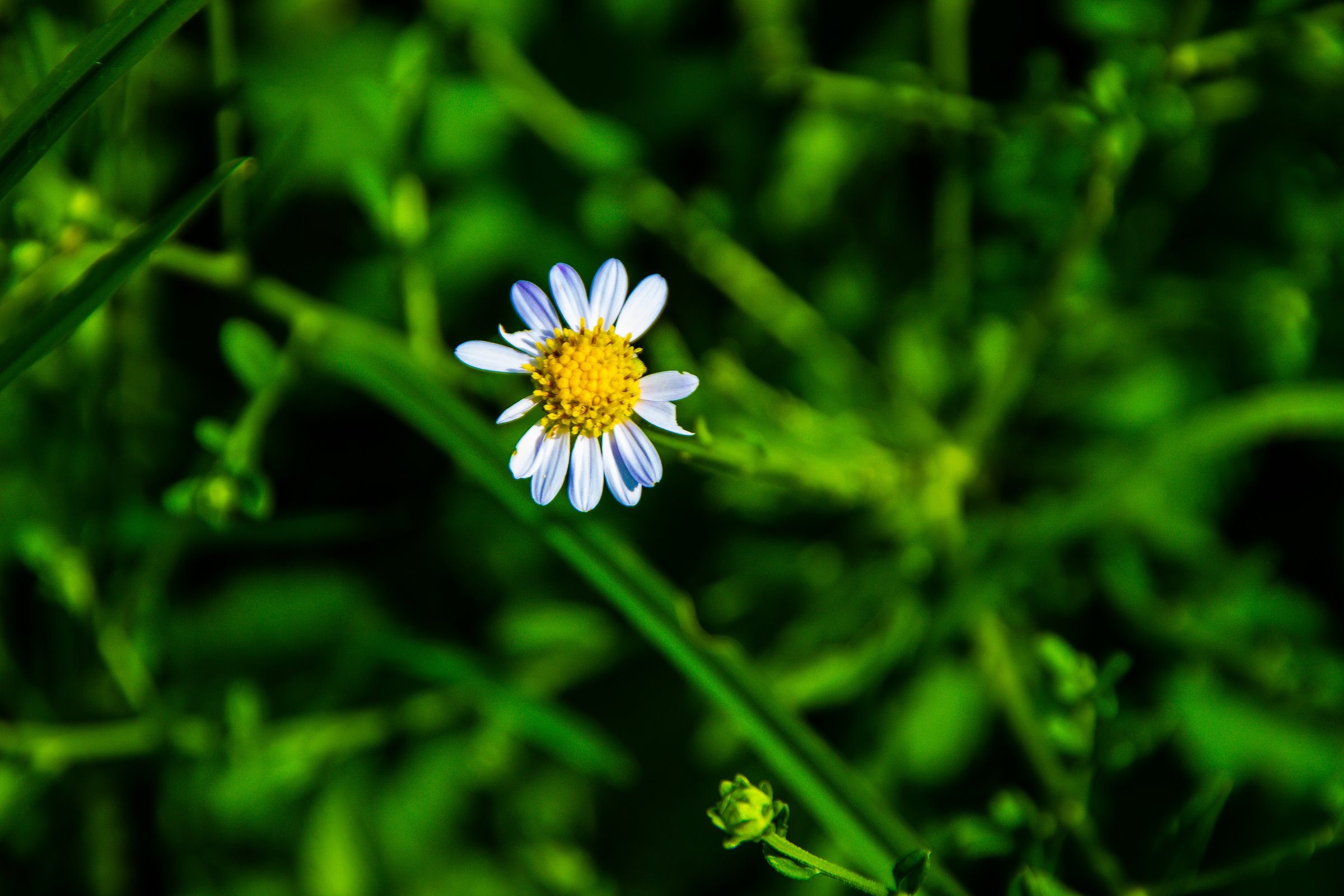
Restoration doesn't end when the sprayers are empty.
A cycle isn't finished until you've logged what's actually growing on the site. The students identified the native species and wrote each one down.
Those records go straight into planning the next phase.
So where does the land stand now?
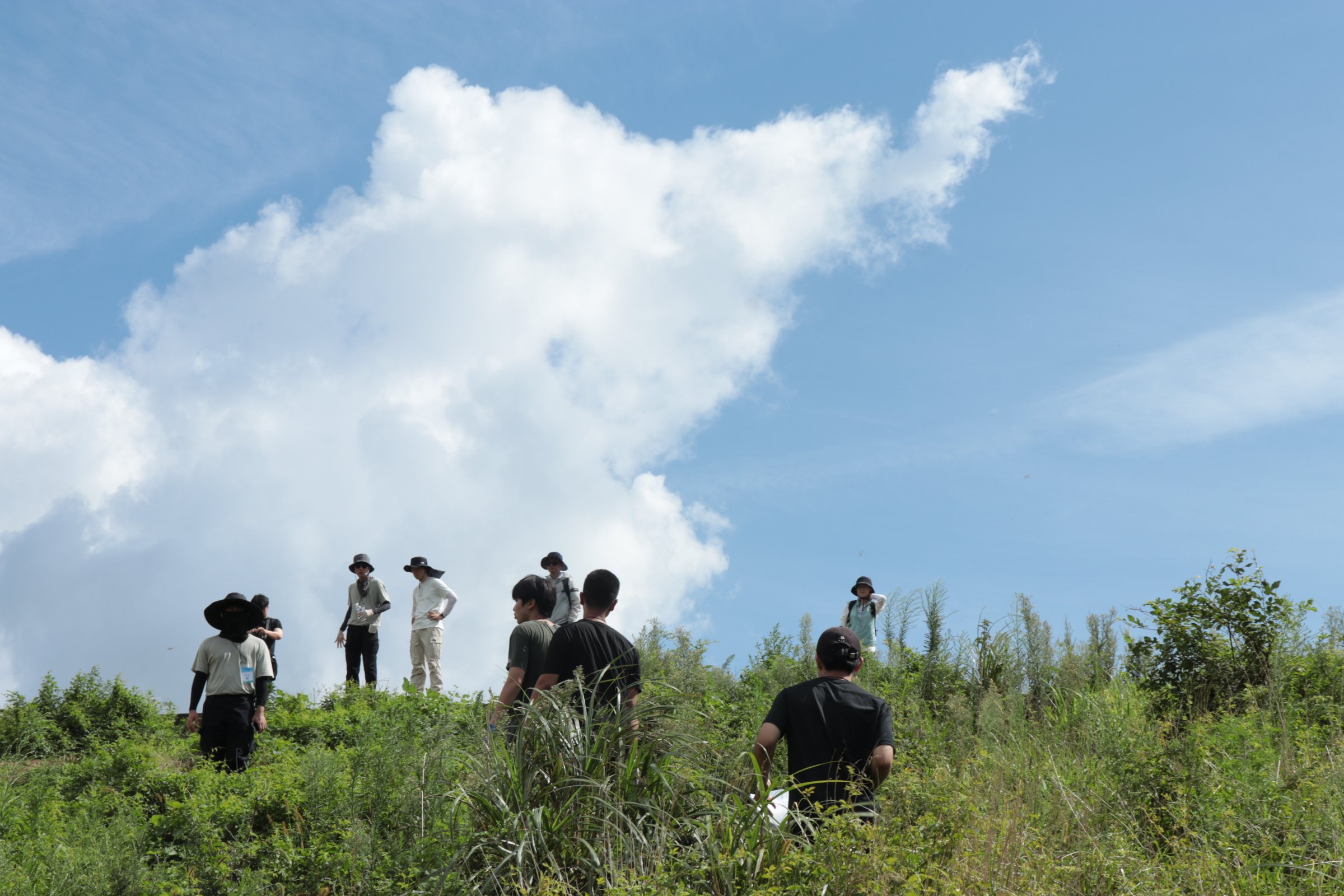
The moss and microbes the students sprayed took hold, and Geumoreum is still recovering.
Beneficial microbial communities — the ones that drive plant growth — rose from roughly 12% of the population to around 29%. Soil organic matter improved, as did total nitrogen and available phosphorus. Native moss is spreading across ground that was bare a year ago.
Land too compacted to hold anything can grow something again.
This year we widened the target area and began year two. Whether corporate giving actually brought this land back is a question the soil answers with time.
Next summer, how much further along will it be?
Share this Insight
Recommended Content
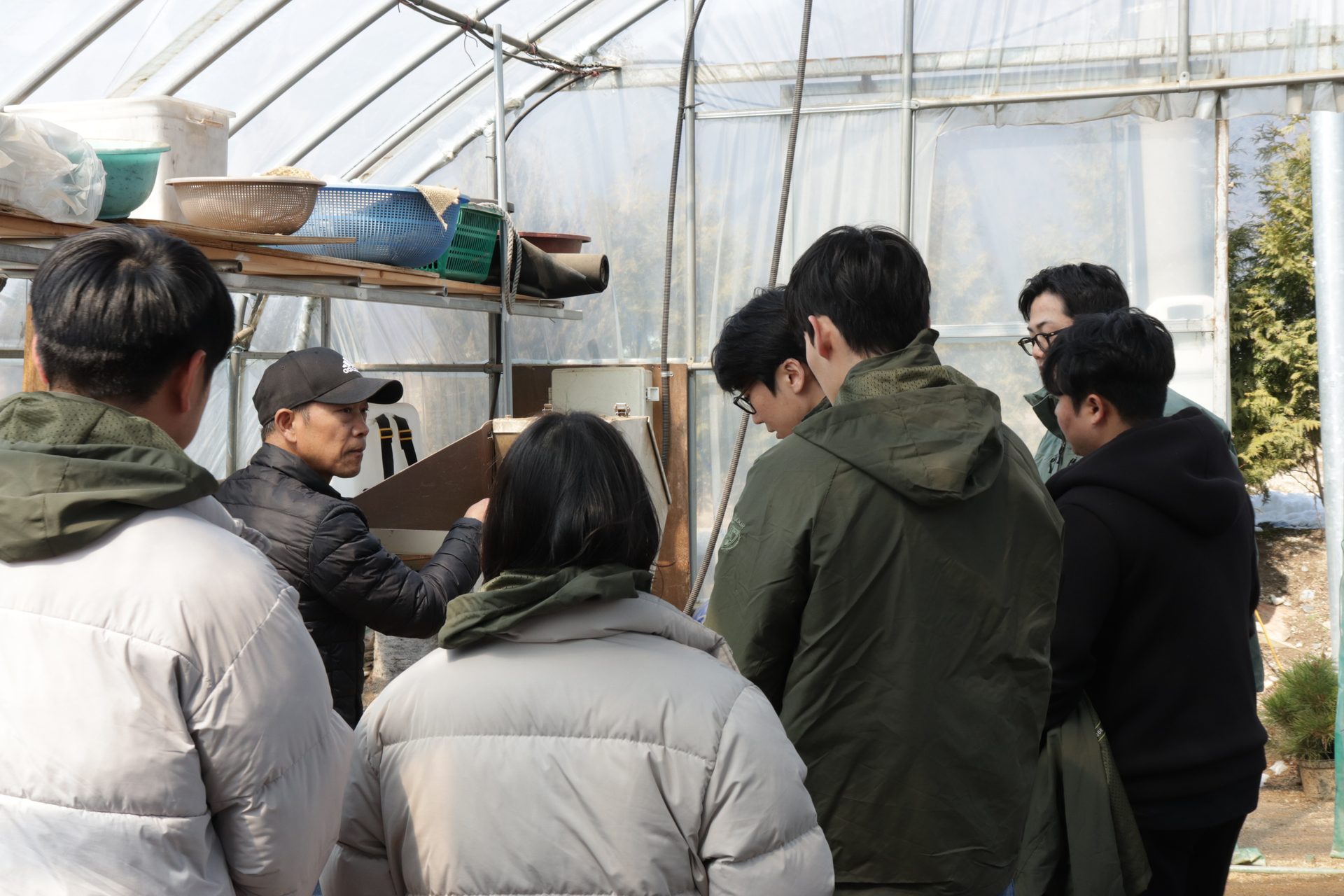
"Can Moss Get Sick?" — Things We Learned at a Moss Farm
Last March, we visited a moss farm in Jeongseon, Gangwon Province
Collaboration
World Environment Day: Why Soil Health Matters for Ecosystem Restoration
The clue to ecosystem restoration may be right beneath us
Stories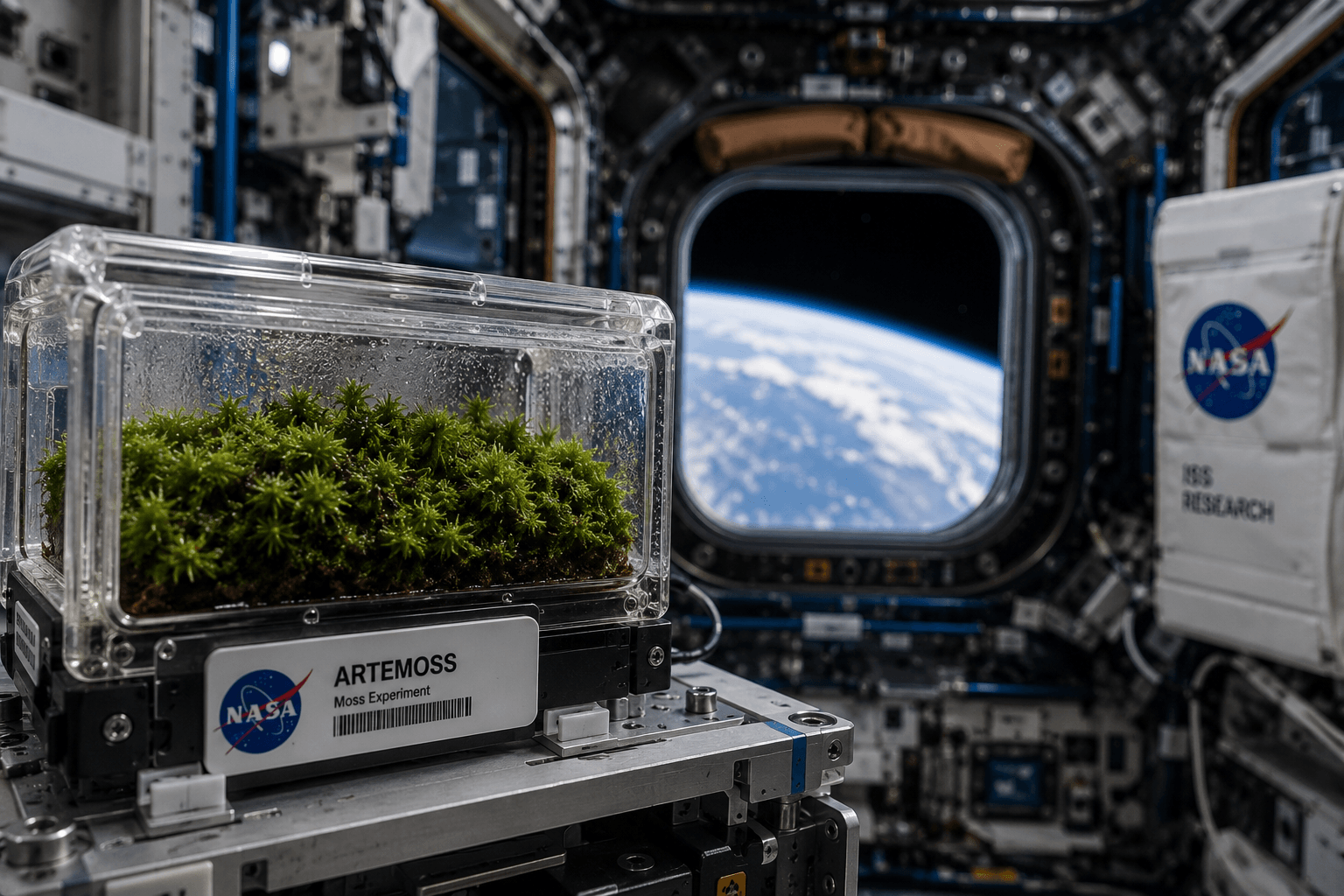
The Tiny Lifeform NASA Took Notice Of: Moss, the Spacefaring Pioneer
NASA’s ARTEMOSS Experiment Sent Moss Into Space
Stories