
Mosby
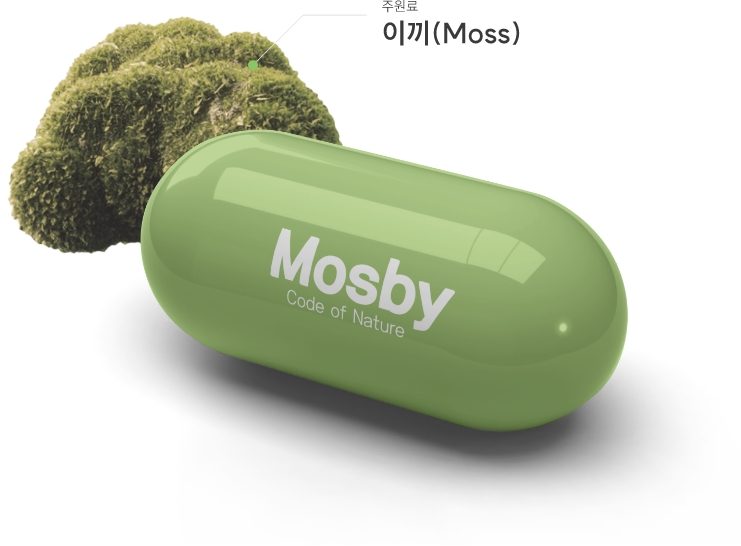
Mosby combines moss spore liquid with specialized nutrients and symbiotic microorganisms to accelerate moss adaptation and establishment — building the initial recovery foundation in wildfire-damaged, reclaimed, and other degraded soils.
Images are for illustrative purposes only. Actual service composition and application may vary depending on site conditions.
What Makes Up Mosby
Mosby is composed of four core elements designed to support early-stage soil restoration and ecological recovery. Each element is blended at the optimal ratio to match the soil conditions of the target site.
Moss Spore Liquid
Selected moss species are applied in spore-liquid form based on site-specific environmental conditions.
Nutrient Solution
A specialized nutrient solution that supports early moss growth and helps initiate soil recovery.
Plant Growth Hormone Solution
Hormonal components that help moss adapt, establish, and grow in degraded environments.
Symbiotic Microbial Solution
Proprietary symbiotic microbial strains (COFN001–COFN006) that restore soil nutrient cycling, improve fertility, and enhance long-term ecological resilience.
Why Moss Becomes the Starting Point of Restoration
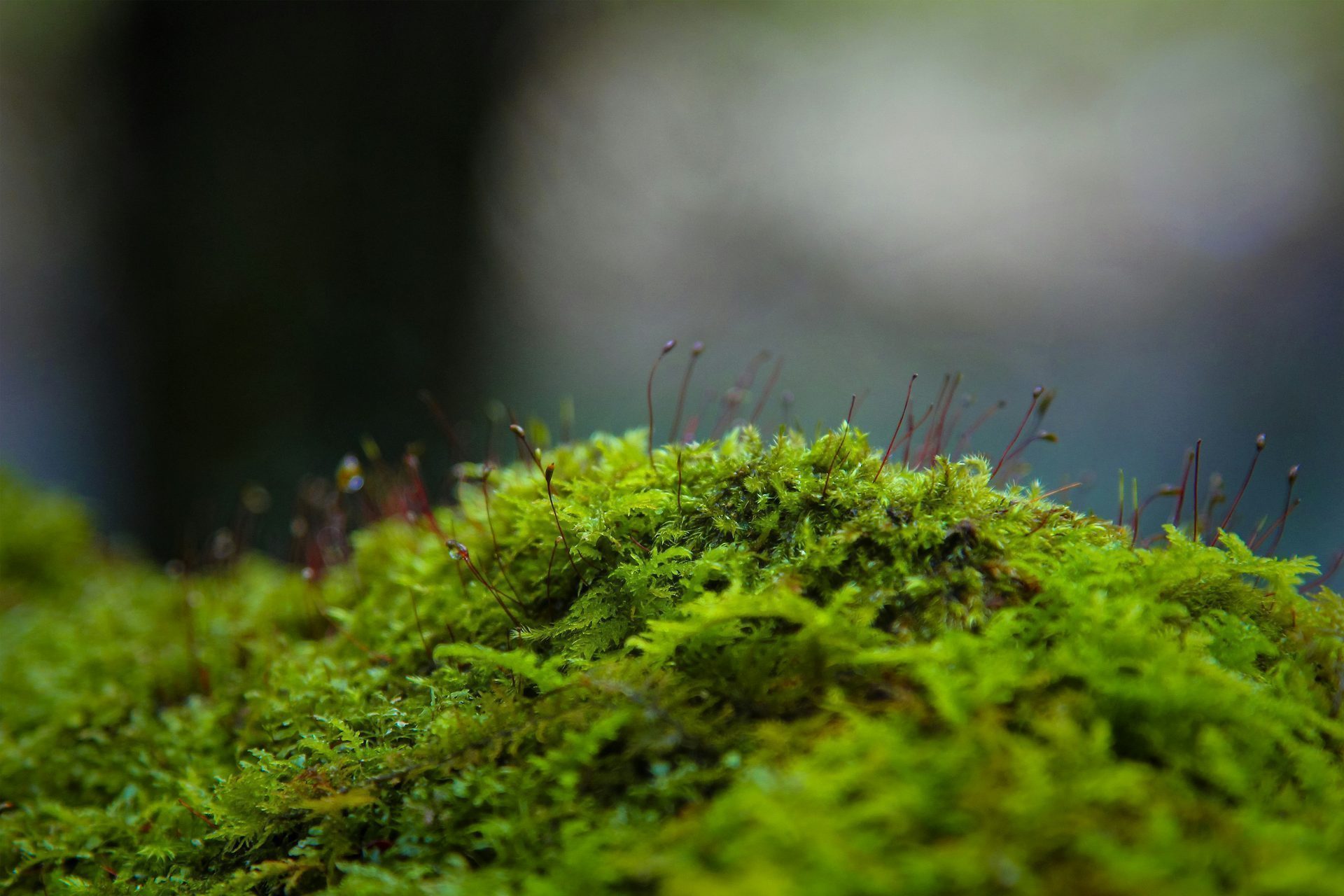
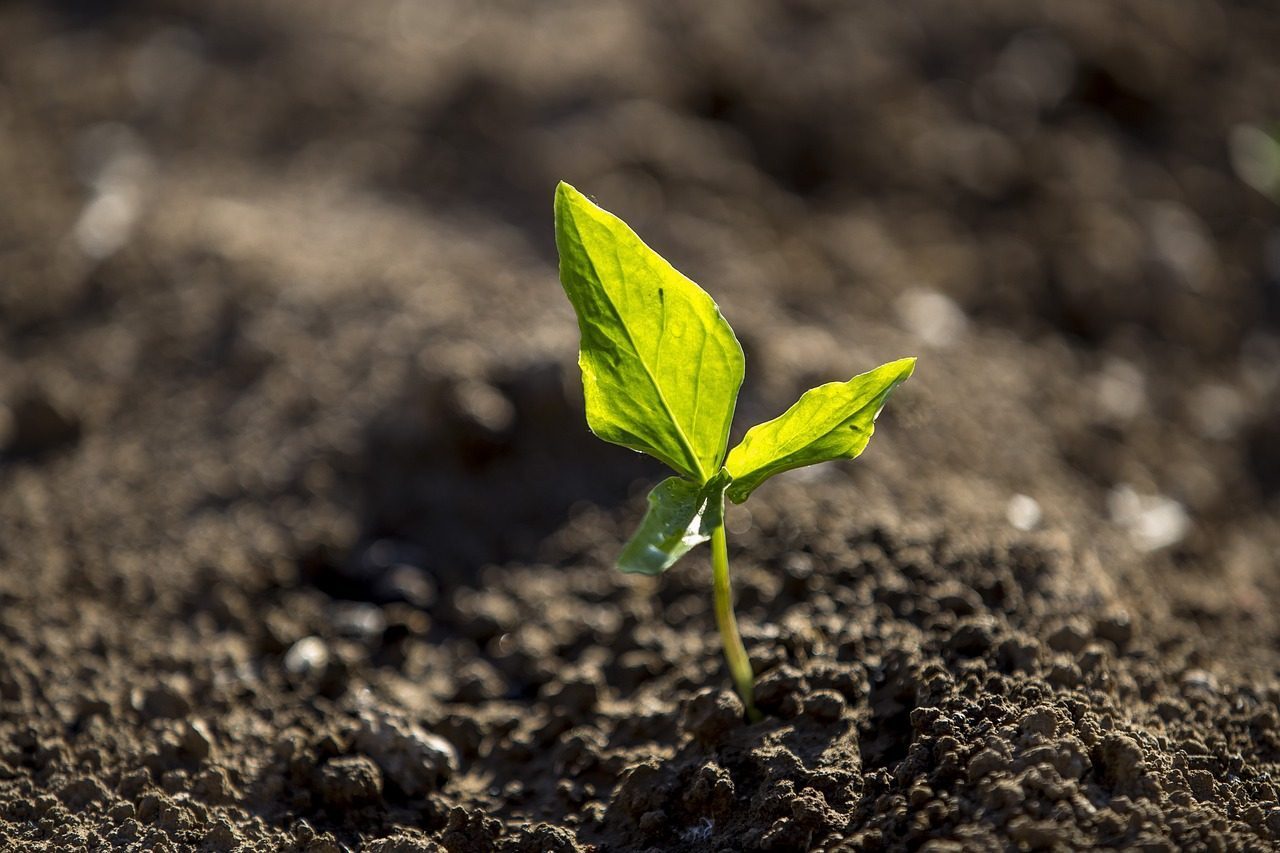
Moss colonizes bare, hostile soil before any other plant — surviving where vegetation cannot. It stabilizes soil surfaces, retains moisture, and initiates the biological conditions for later vegetation to take hold. Mosby harnesses this ecological role to accelerate recovery of wildfire-damaged, volcanic, and reclaimed land.
Moss helps stabilize soil surfaces, retain moisture in the early succession stage, and create the conditions for later vegetation establishment.
How Mosby Is Applied
No complex construction required — simply dilute and spray to create the conditions for moss to establish itself on degraded soil.
1. Mosby is diluted at an appropriate ratio according to site conditions.
2. The diluted solution is evenly sprayed across the degraded soil surface.
3. This creates the initial conditions for moss establishment and early soil recovery.
Measured Effects of Mosby
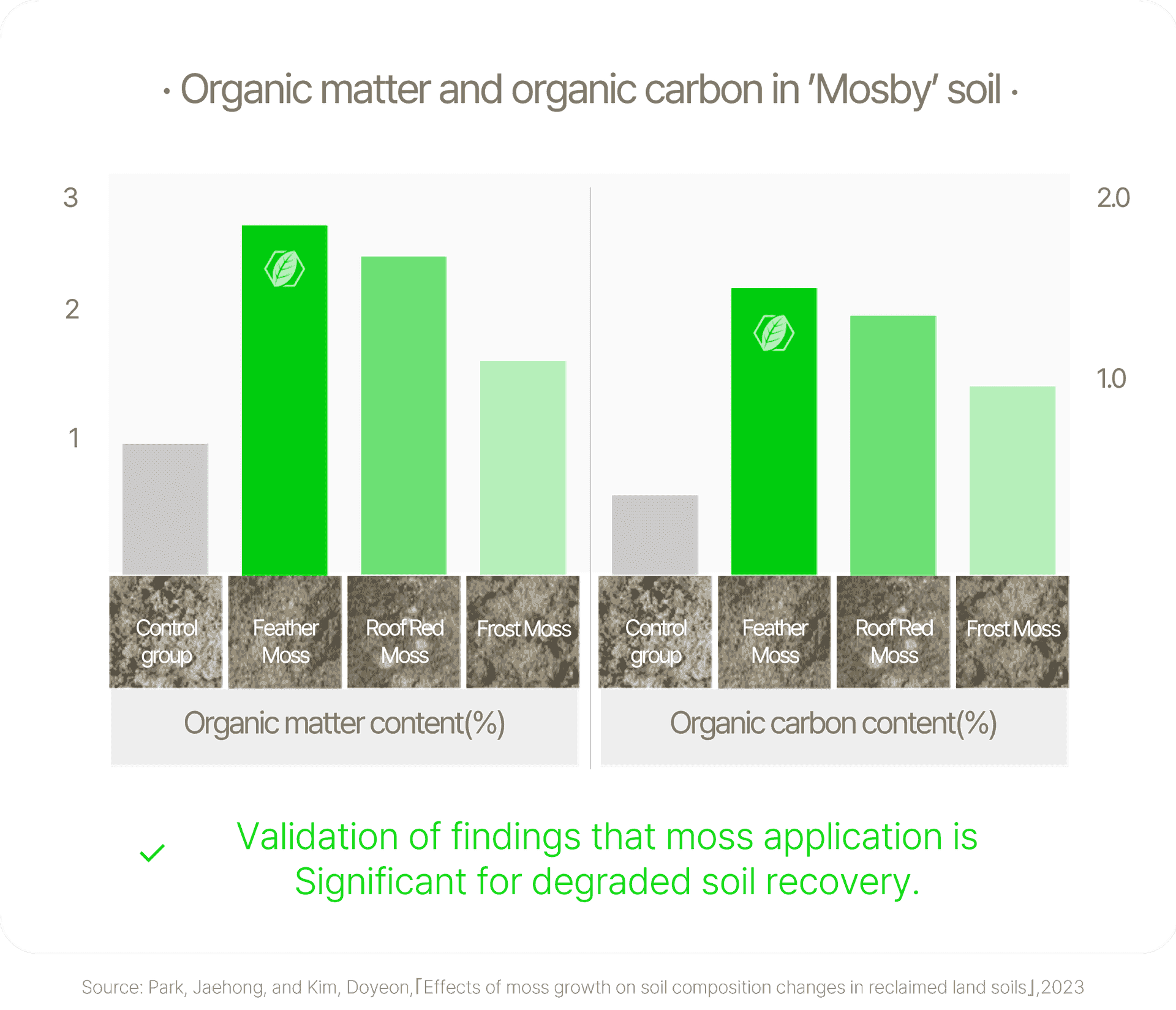
Results showed a tendency for organic matter and carbon content to improve in reclaimed soil after Mosby application, indicating recovery in the soil's physical and chemical properties.
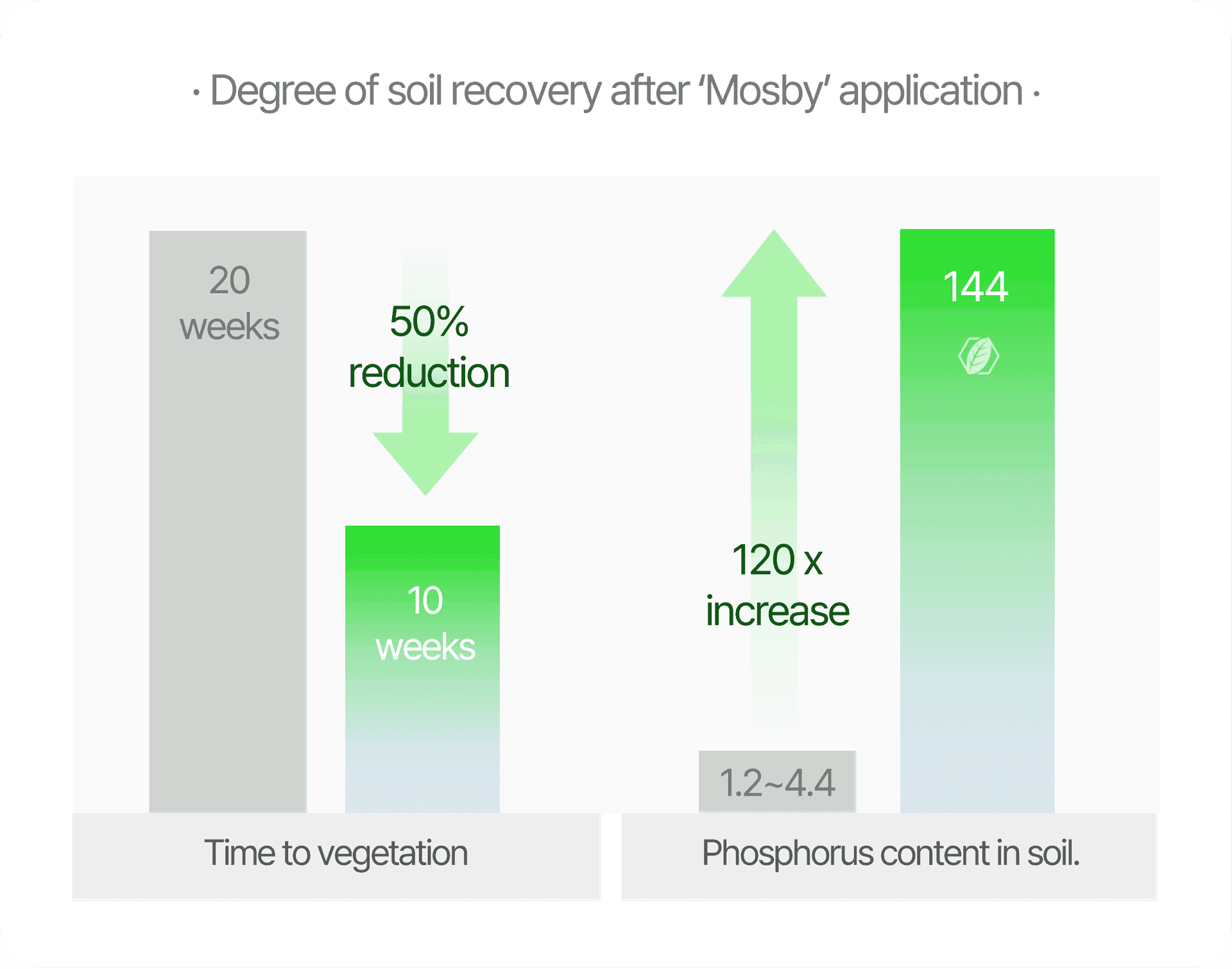
Results showed a tendency for phosphorus content to improve after Mosby application, strengthening the nutrient foundation needed for biological growth and soil recovery.
Before and After: Mosby in Practice
Gyeongpo Wildfire-Damaged Site
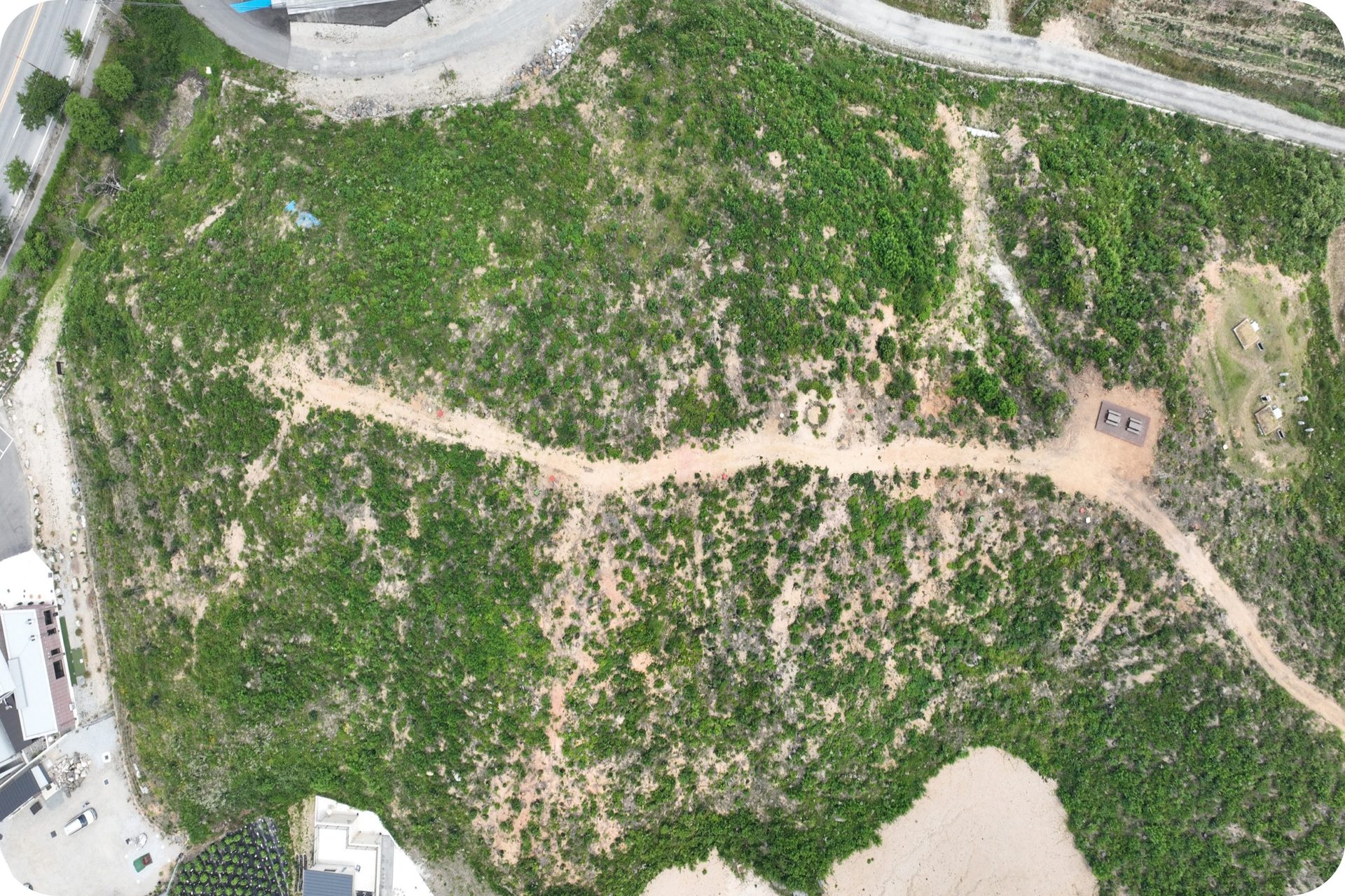
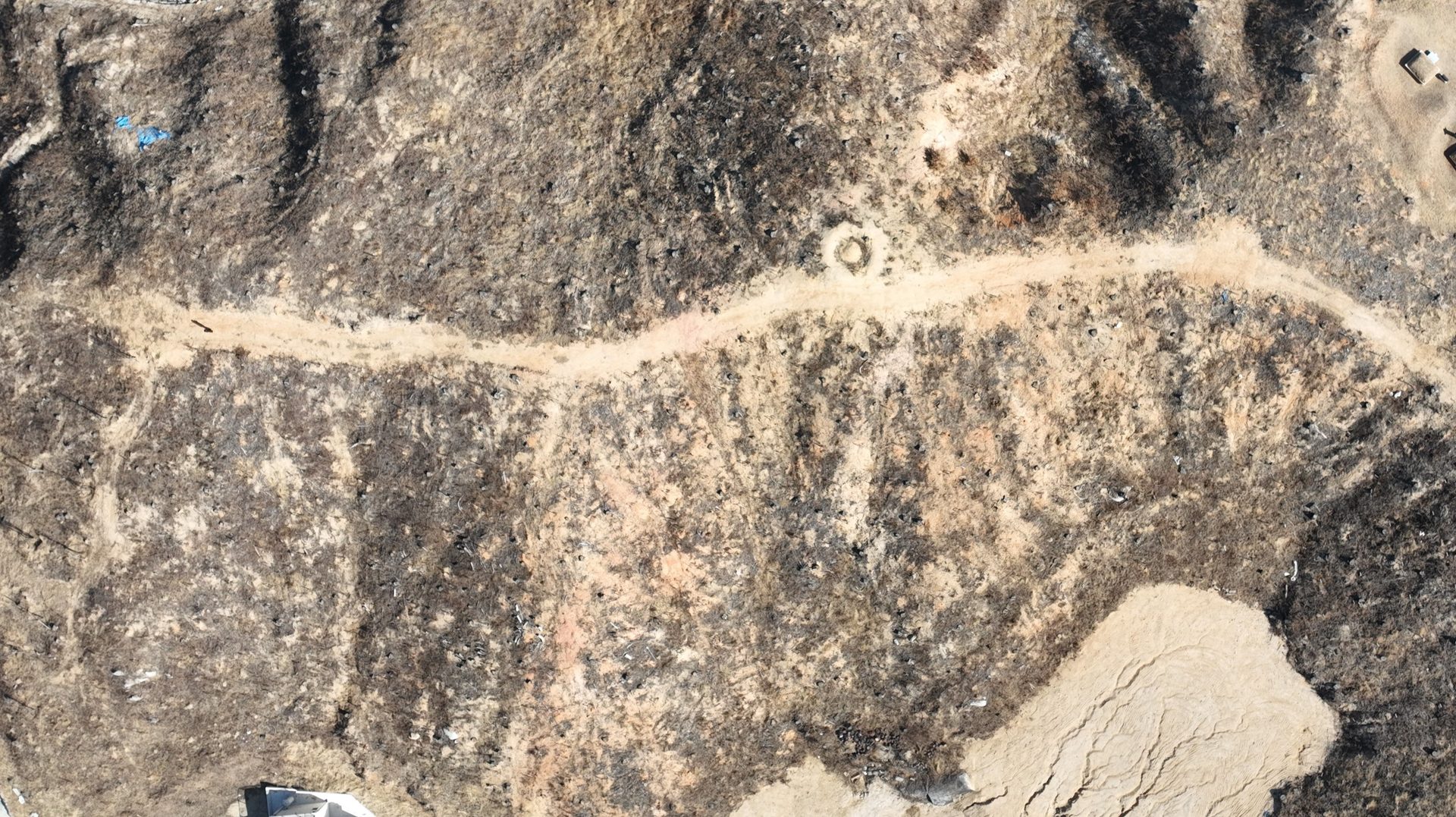 Before Application6 Months After Application
Natural Regeneration vs. Mosby-Based Restoration
Changes Observed Under Mosby-Based Restoration
vs. natural regeneration
vs. natural regeneration
vs. natural regeneration
Initial stabilization observed
The Value Mosby Creates for Businesses
Restoration activities using Mosby can go beyond soil recovery and contribute to natural capital management and long-term ESG action.
Mosby helps recover degraded soil and rebuild the ecological foundation that allows natural systems to function again.
Restoration area and soil recovery outcomes can be linked to measurable natural capital indicators that companies can track and report over time.
Environmental restoration can be linked to ESG strategies and expanded into a more structured, long-term sustainability practice.
Mosby-based restoration can also be expanded into natural capital management indicators that align with climate and environmental disclosure frameworks.
Where Mosby Is Applied
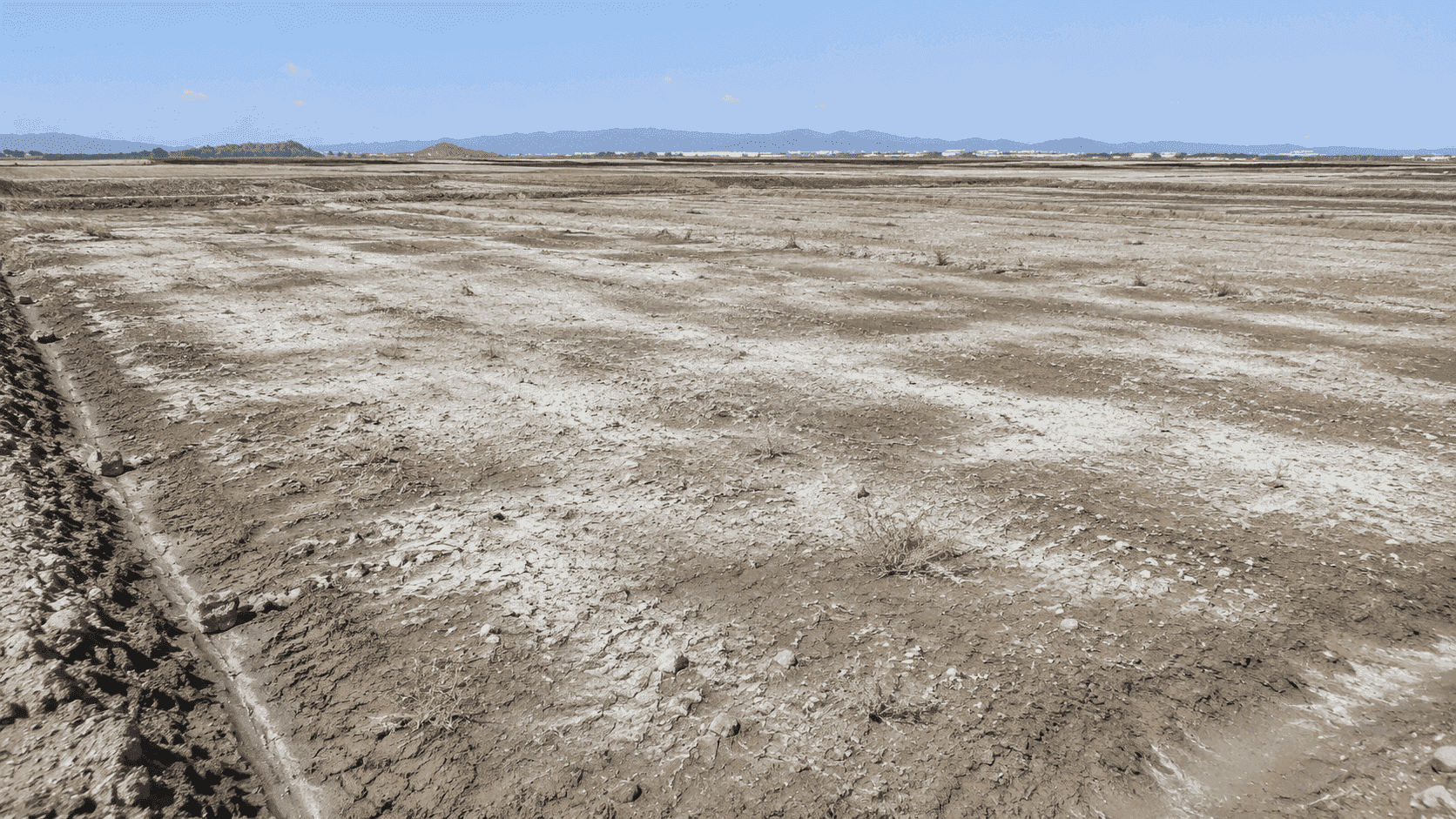
Reclaimed Land Improvement
Functional soil recovery in salt-damaged or nutrient-overloaded soils
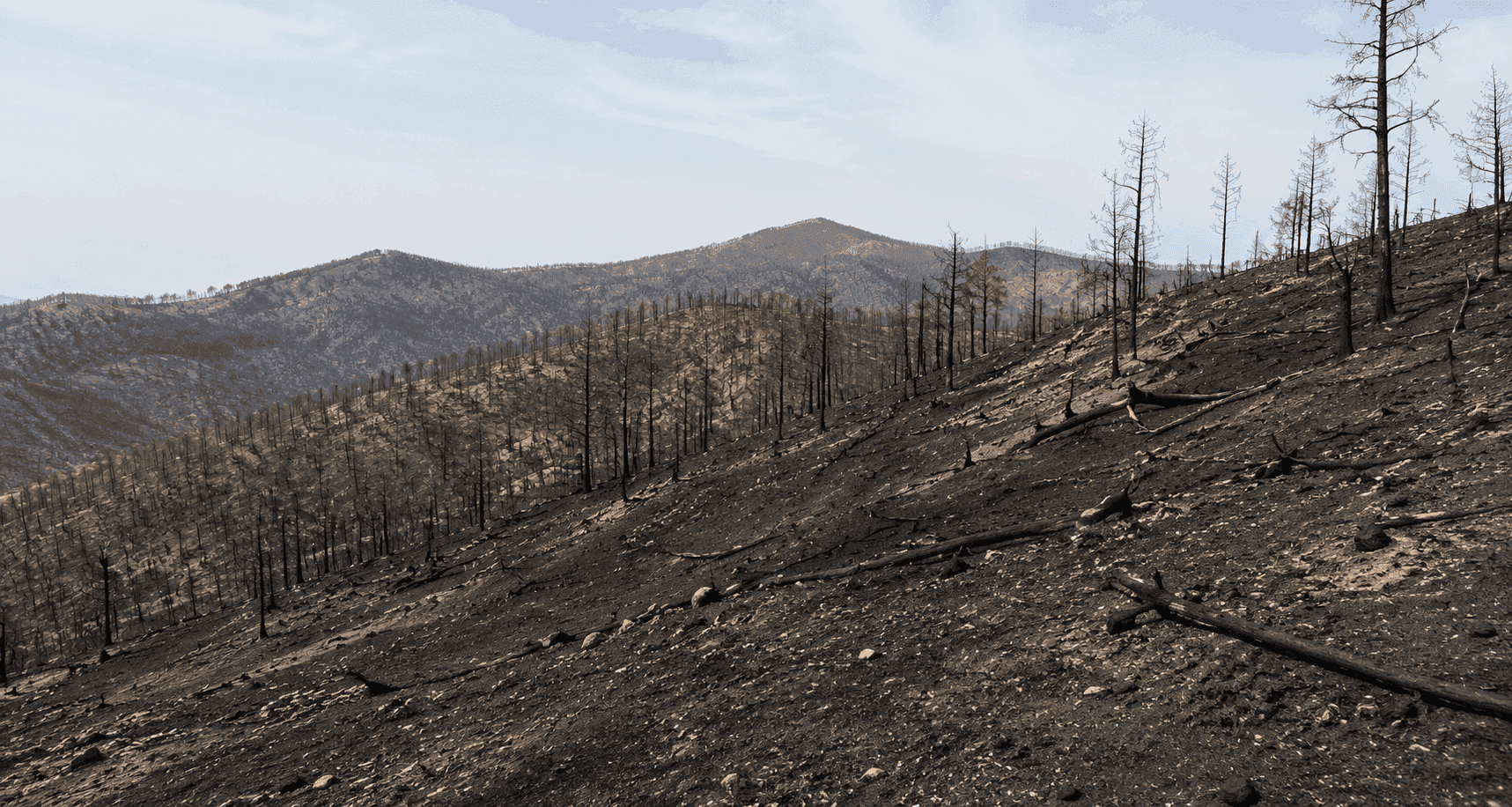
Wildfire Recovery
Early restoration and topsoil stabilization of degraded forest and woodland
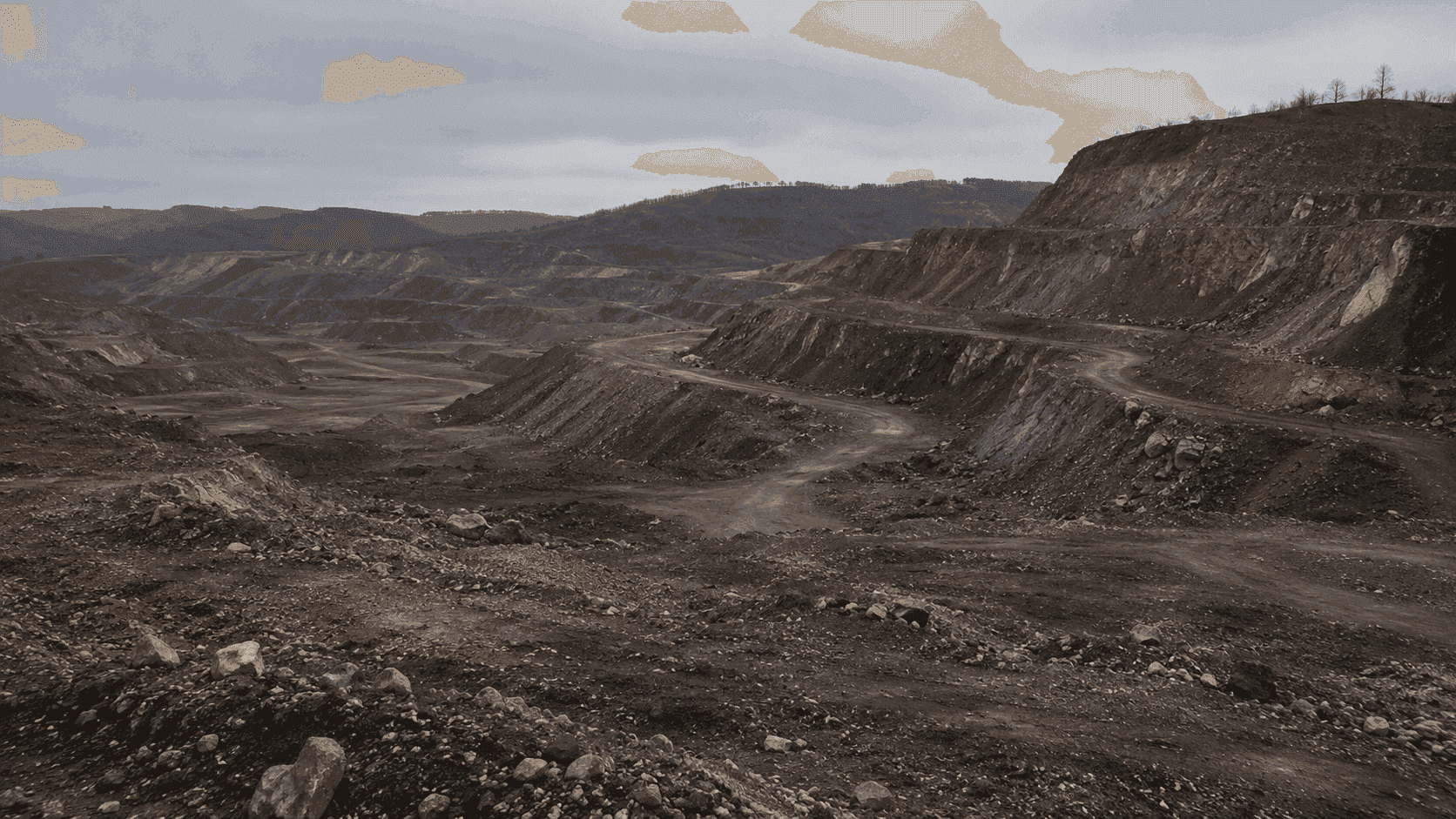
Mine & Post-Mining Restoration
Soil recovery and site regeneration of post-mining land
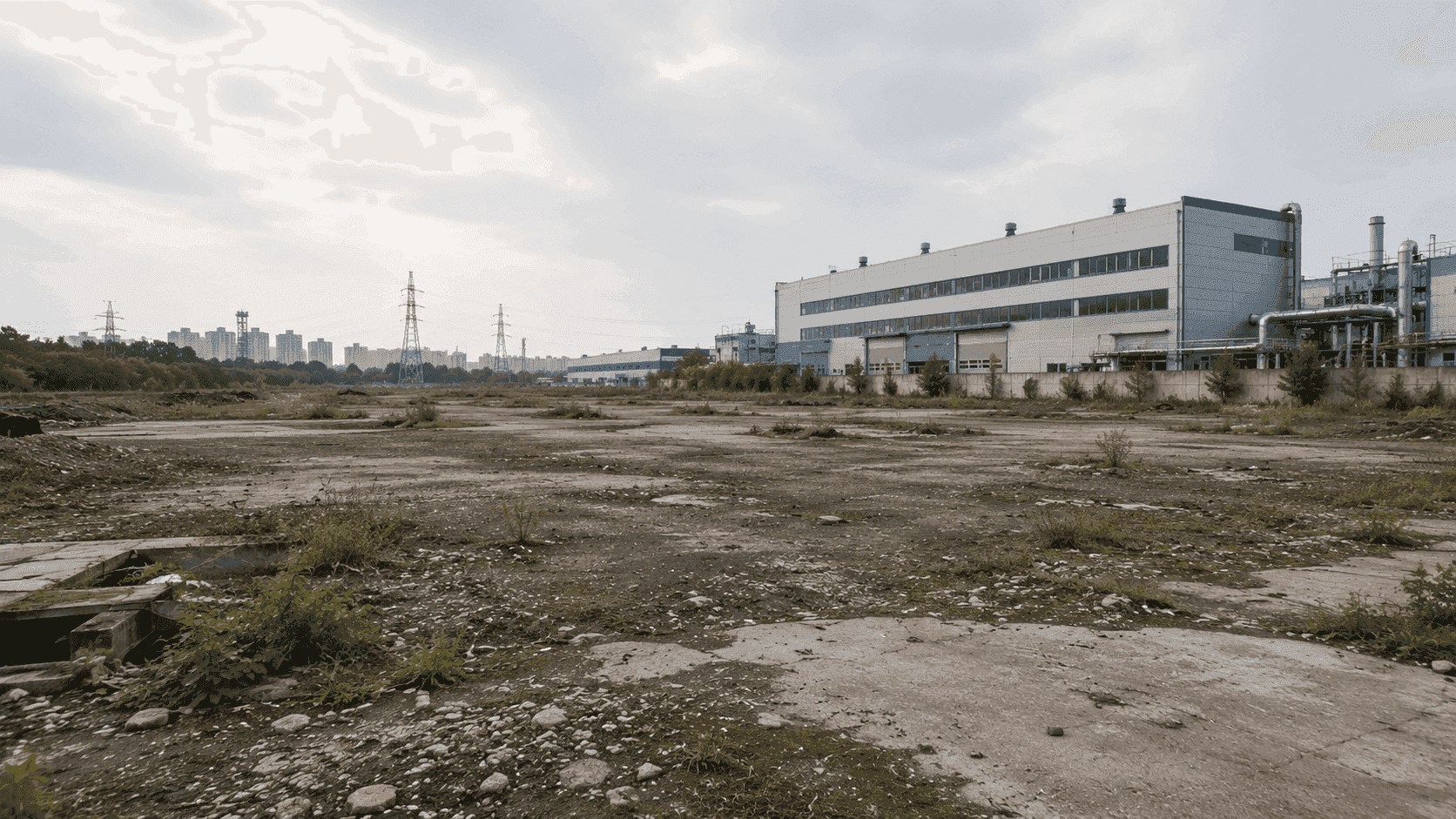
Industrial Site Regeneration
Soil base recovery on aging or idle industrial land
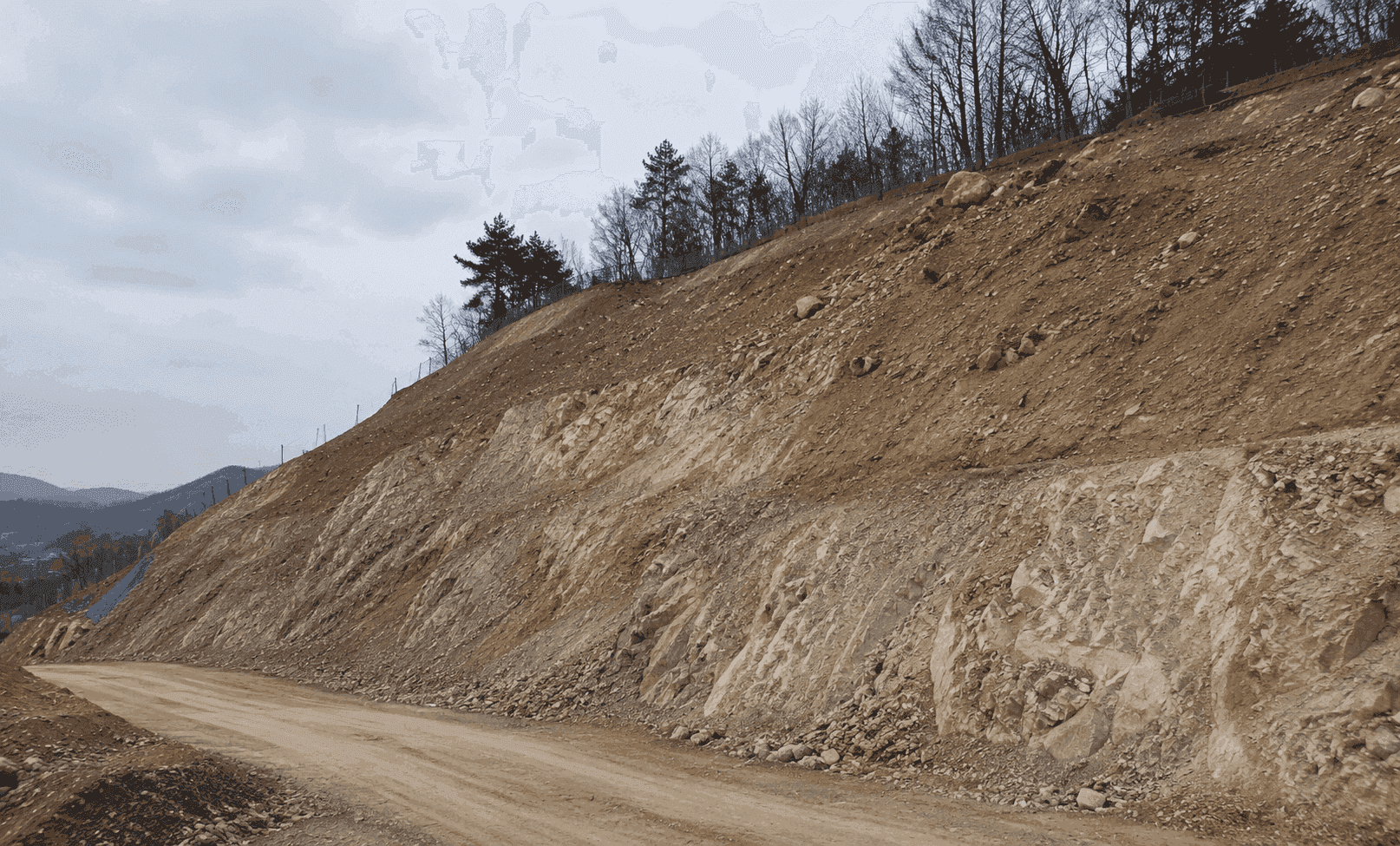
Cut Slope Stabilization
Erosion prevention and revegetation of exposed slopes from construction
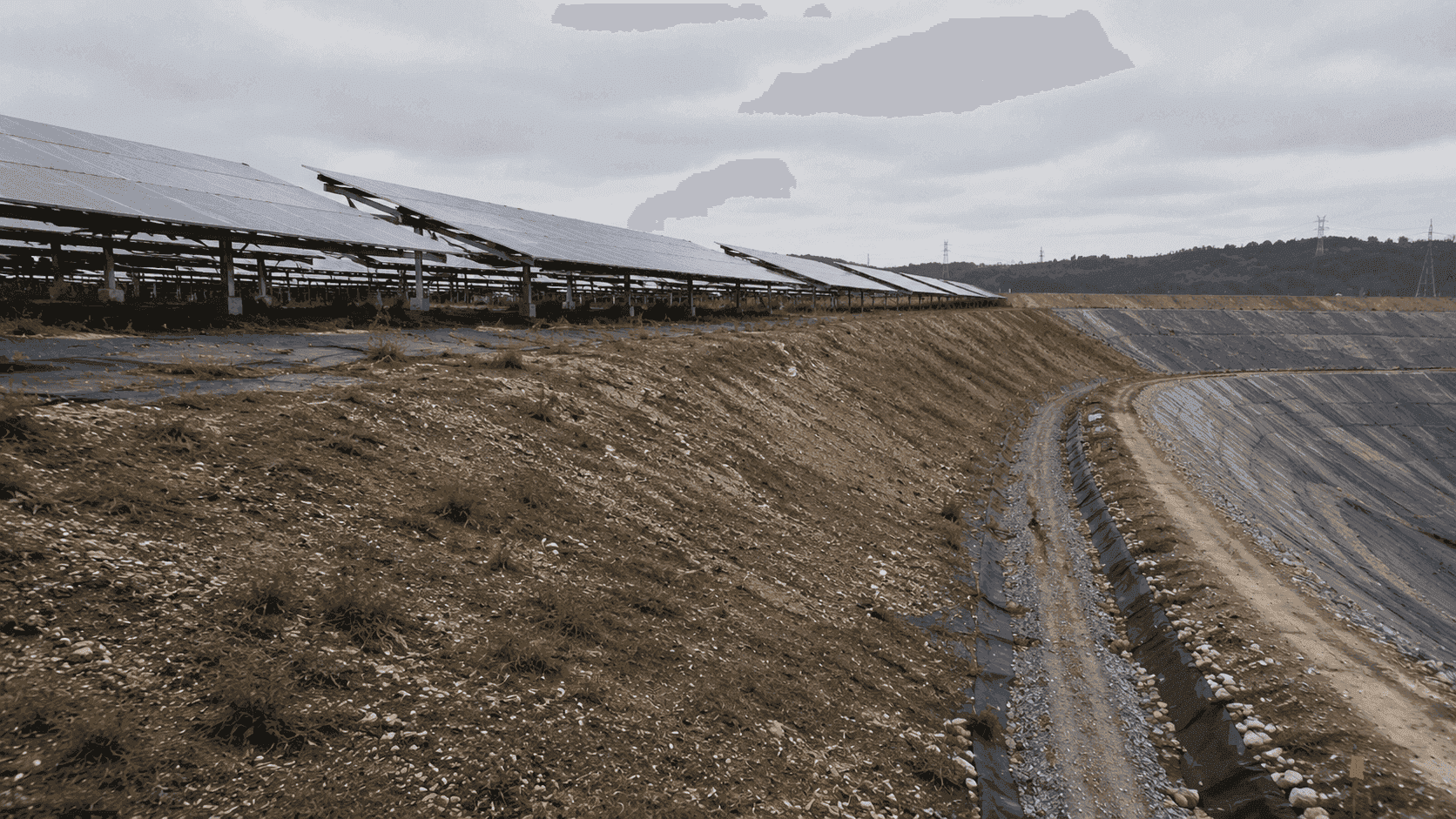
Solar Farm & Landfill Management
Ground stabilization and vegetation cover at solar farm sites and on landfill caps
Reclaimed Land Improvement
Functional soil recovery in salt-damaged or nutrient-overloaded soils
Wildfire Recovery
Early restoration and topsoil stabilization of degraded forest and woodland
FAQ
Soil restoration is the process of rebuilding the biological function, structure, and biodiversity of degraded land — whether damaged by wildfires, mining, construction, or other disturbances. Moss plays a key role because it can colonize bare, compacted, or nutrient-depleted soil where conventional plants cannot survive. By stabilizing the surface, retaining moisture, and supporting microbial life, moss creates the biological foundation for ecosystems to recover naturally over time.
Unlike conventional restoration methods that often focus on planting or short-term greening, Mosby is designed to create the starting point for soil recovery and ecological restoration through moss-based biological cover. Because moss can establish itself even in harsh environments, Mosby is effective in supporting early settlement, soil stabilization, and the conditions needed for later vegetation recovery.
Mosby supports natural recovery without replacing existing ecosystems. Site conditions are assessed before application and appropriate moss species are selected. After application, soil and vegetation changes are monitored continuously — allowing recovery to proceed at nature's pace.
Moss absorbs water and nutrients through its leaf and stem surfaces rather than root systems, so it doesn't compete for soil nutrients the way typical weeds do. This makes moss a non-competitive pioneer species — ideal for establishing cover in degraded soil without disrupting existing ecology.
A single application of Mosby can typically cover approximately 250–500㎡. Actual coverage may vary depending on soil condition, degree of degradation, and restoration goals.
Mosby can be applied to degraded soils such as wildfire-damaged land, reclaimed land, damaged ecosystems, and aging industrial areas. Actual suitability depends on site conditions, restoration goals, and environmental assessment results.
Yes. Because Mosby is a site-specific restoration solution, field assessment and soil condition review are important before application. These help determine the appropriate moss species, application method, and treatment scope for each site.
MoNS
MoNS Moss Nutrient Fertilizer
The dedicated fertilizer used to cultivate moss for Mosby restoration projects.