
"Can Moss Get Sick?" — Things We Learned at a Moss Farm
Last March, we visited a moss farm in Jeongseon, Gangwon Province
We visited Water & Art, a moss farm in Jeongseon, Gangwon Province, this past March. Walking in, the first thing that caught our eye was row after row of green cultivation beds stretching into the distance. From afar, they all looked the same. Up close, it was a much more delicate world than we'd expected.
Some moss felt firm and alive under our fingertips. Others had a slightly dull color. The soil was the same way — some sections felt just right, others had been holding moisture a little too long.
The farm owner picked up a clump of moss and showed us.
"Moss can't be too dry, and it can't be too wet. Finding that middle ground — that's the hardest part."
After hearing that, we started to understand why nothing on this farm gets overlooked.
What Kind of Moss Farm Is Water & Art?
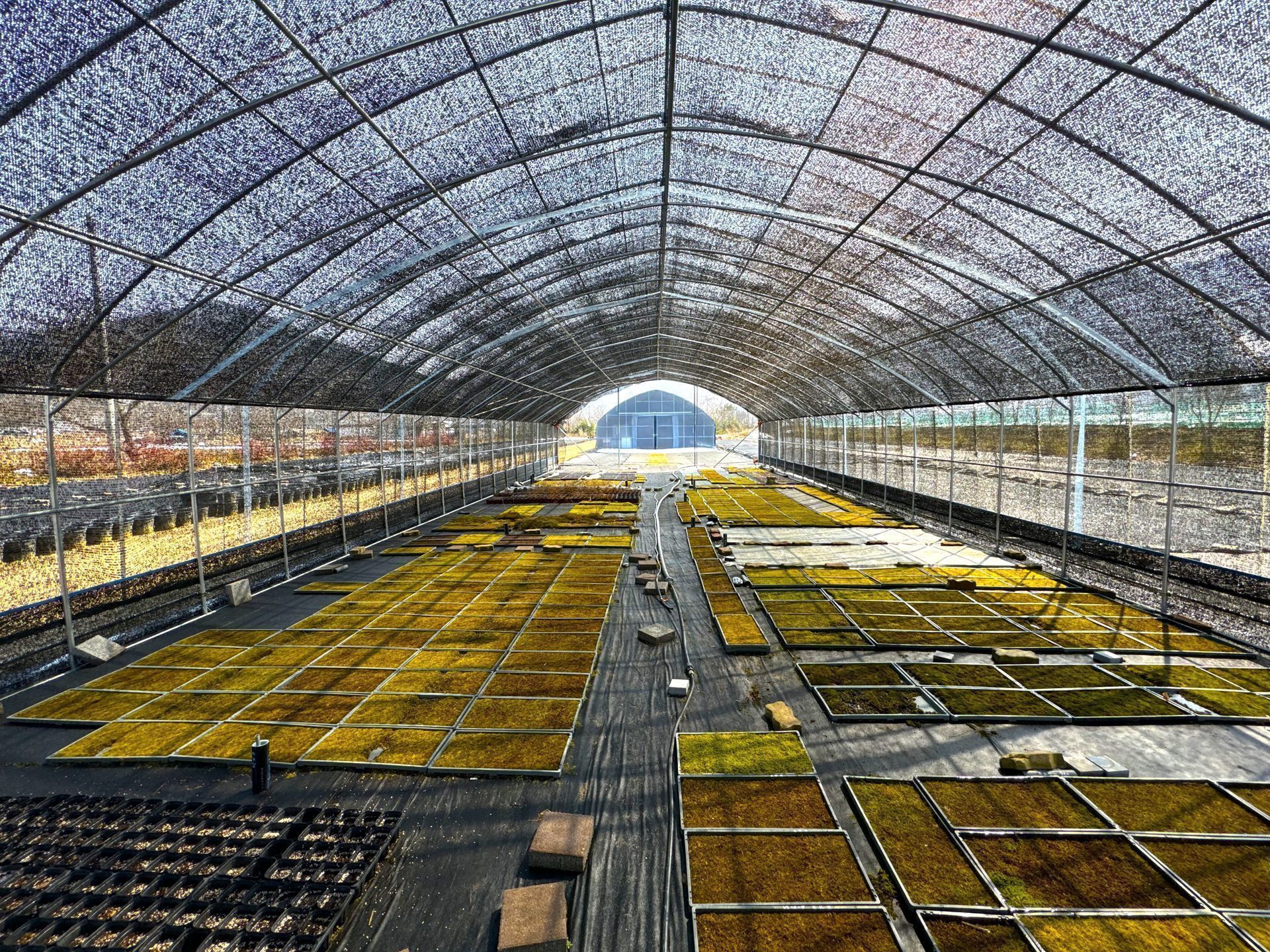
Water & Art is a professional moss cultivation farm spanning approximately 20,000 square meters in Jeongseon, Gangwon Province. It's the first farm in Korea to attempt full-scale commercial production of silvery thread moss on open flatlands, and today specializes in growing both silvery thread moss and feather moss.
The farm's core businesses are moss landscaping and accent landscaping. Seeing it in person made it clear why years of hands-on experience matter so much here. The same moss can look completely different depending on the season, humidity, water flow, and angle of sunlight. There's no single formula that works every time.
We Got Our Hands Dirty
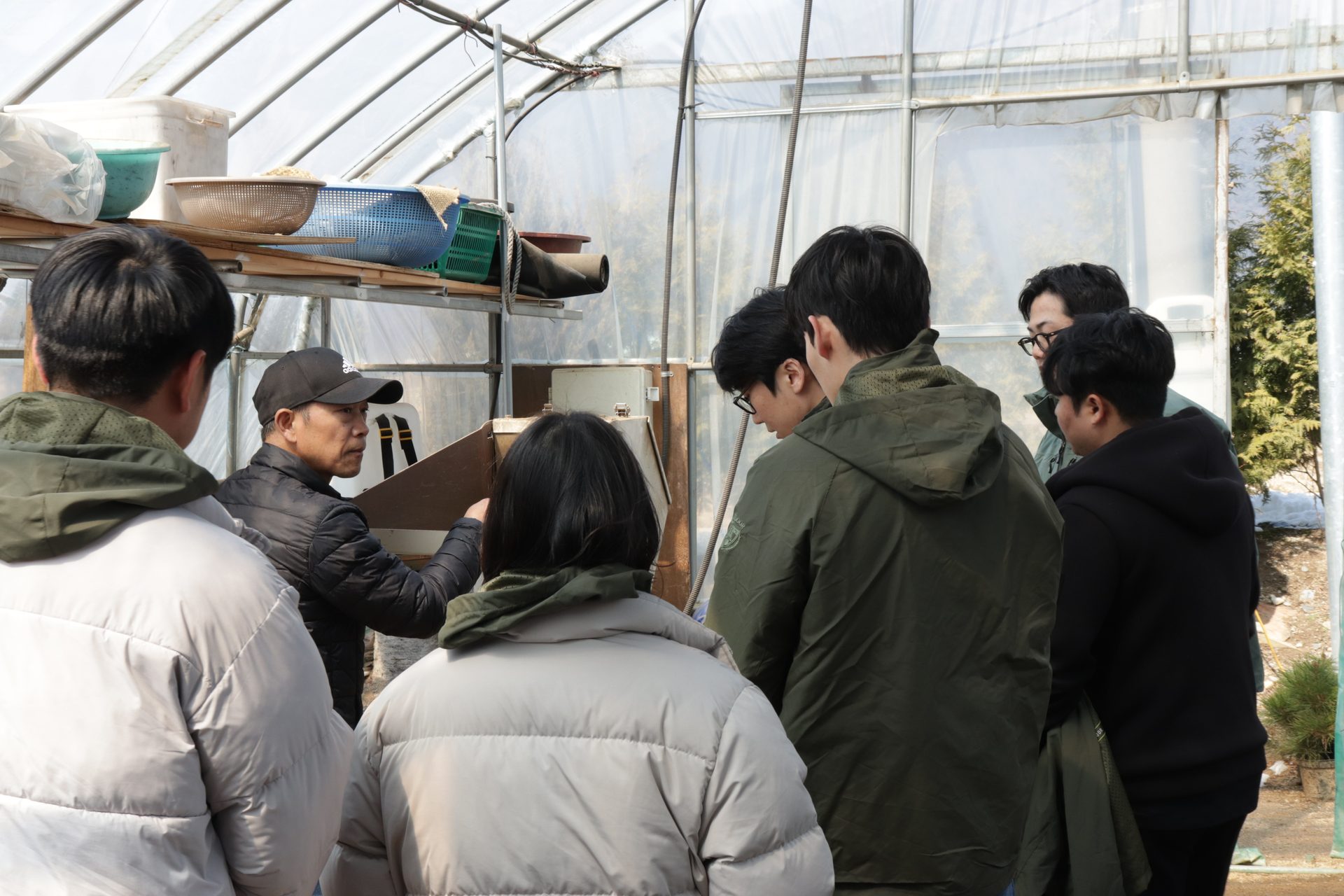
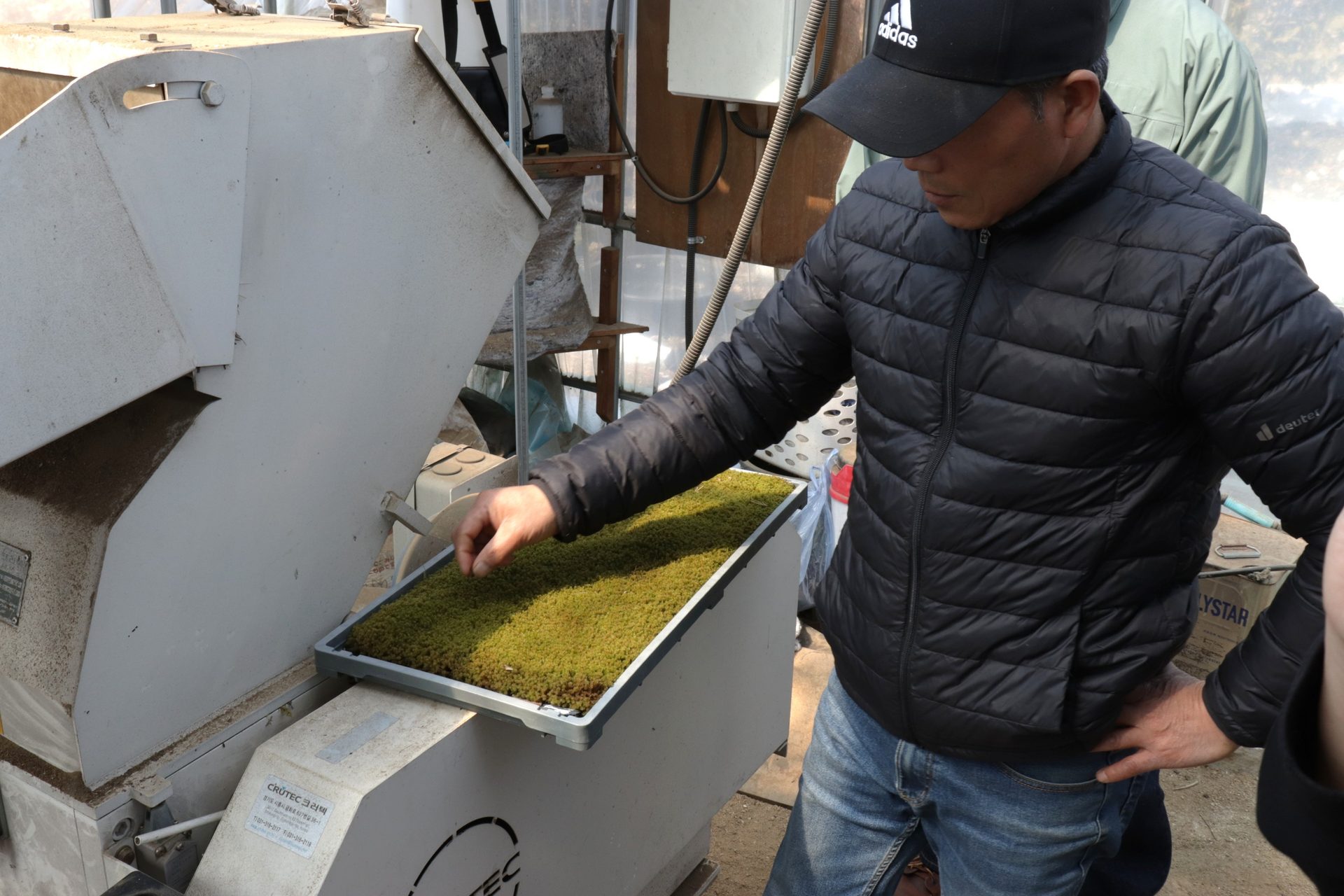
We didn't just listen and leave. Guided by the farm owner, we got into the cultivation beds ourselves — feeling the soil, handling the moss directly.
Comparing healthy moss to struggling moss up close — the differences in color, texture, and density — gave us a feel for things that papers and data just can't capture. The owner's insight into what conditions help moss thrive, and what conditions throw it off, was the kind of knowledge you can only get from years in the field.
Even from a research perspective, there's a real difference between touching something in person and looking at it through data back in the lab. The intuitions we built that day became a quiet reference point for the work that followed.
What Happens When Moss Gets Sick?
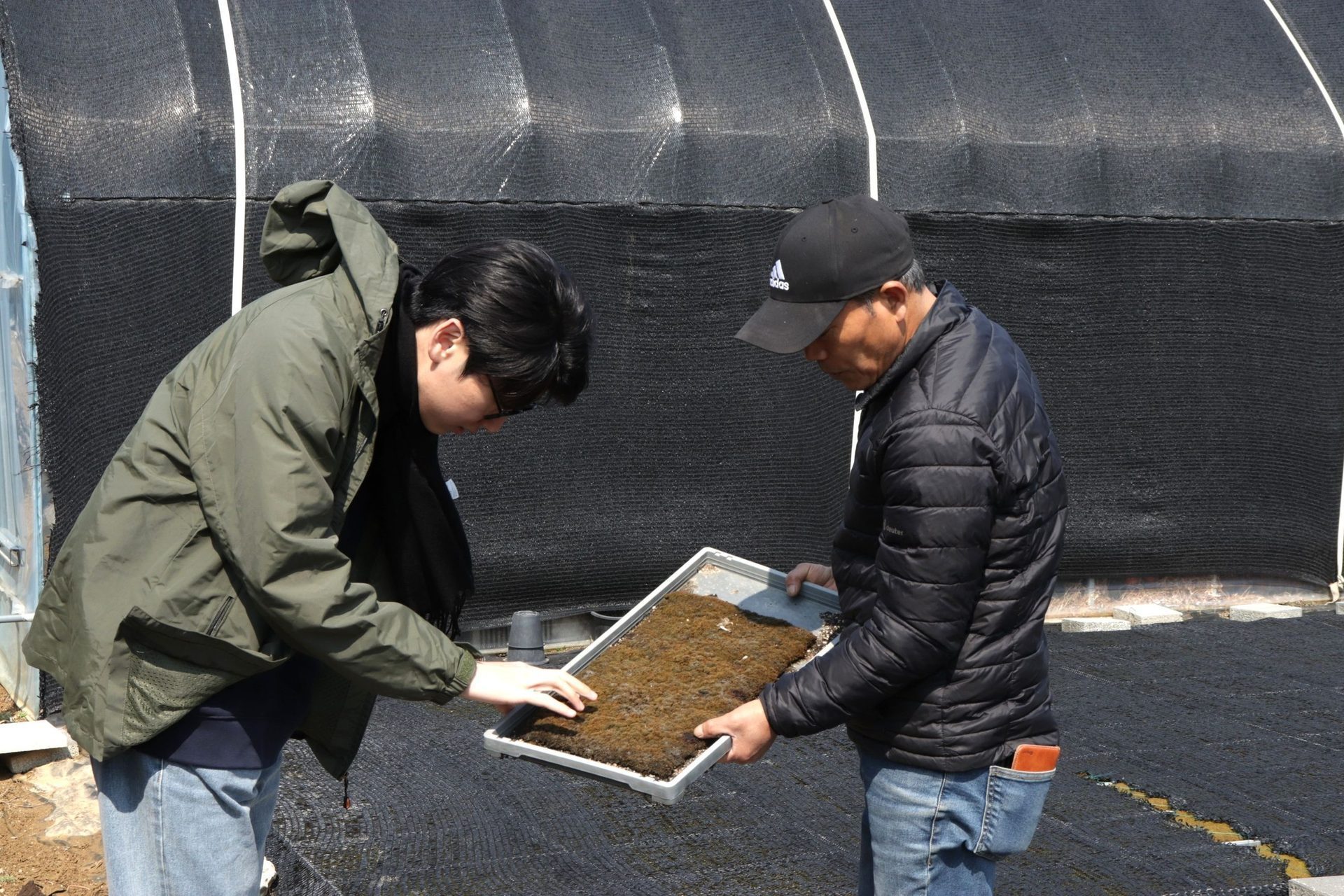
While walking the farm, something caught our attention. One of the beds had moss that looked different — patches of dull, discolored growth that felt off to the touch. The owner mentioned it had been a lingering concern.
Moss rot disease is a fungal condition that develops in overly humid environments. It starts as small patches of discoloration, but left untreated, it can spread across an entire healthy colony — directly affecting quality and yield.
For the research team, honestly? It was an exciting find. We'd never seen the symptoms firsthand in the field before. We wanted to figure out the cause as quickly as possible and get a real treatment protocol back to the farm.
Back at the lab, we got straight to work. We isolated candidate pathogens, inoculated moss samples, and ran experiments to see if we could reproduce the same symptoms. That process helped us narrow down the cause — and we delivered a tailored management approach directly to Water & Art.
MoNS in the Field
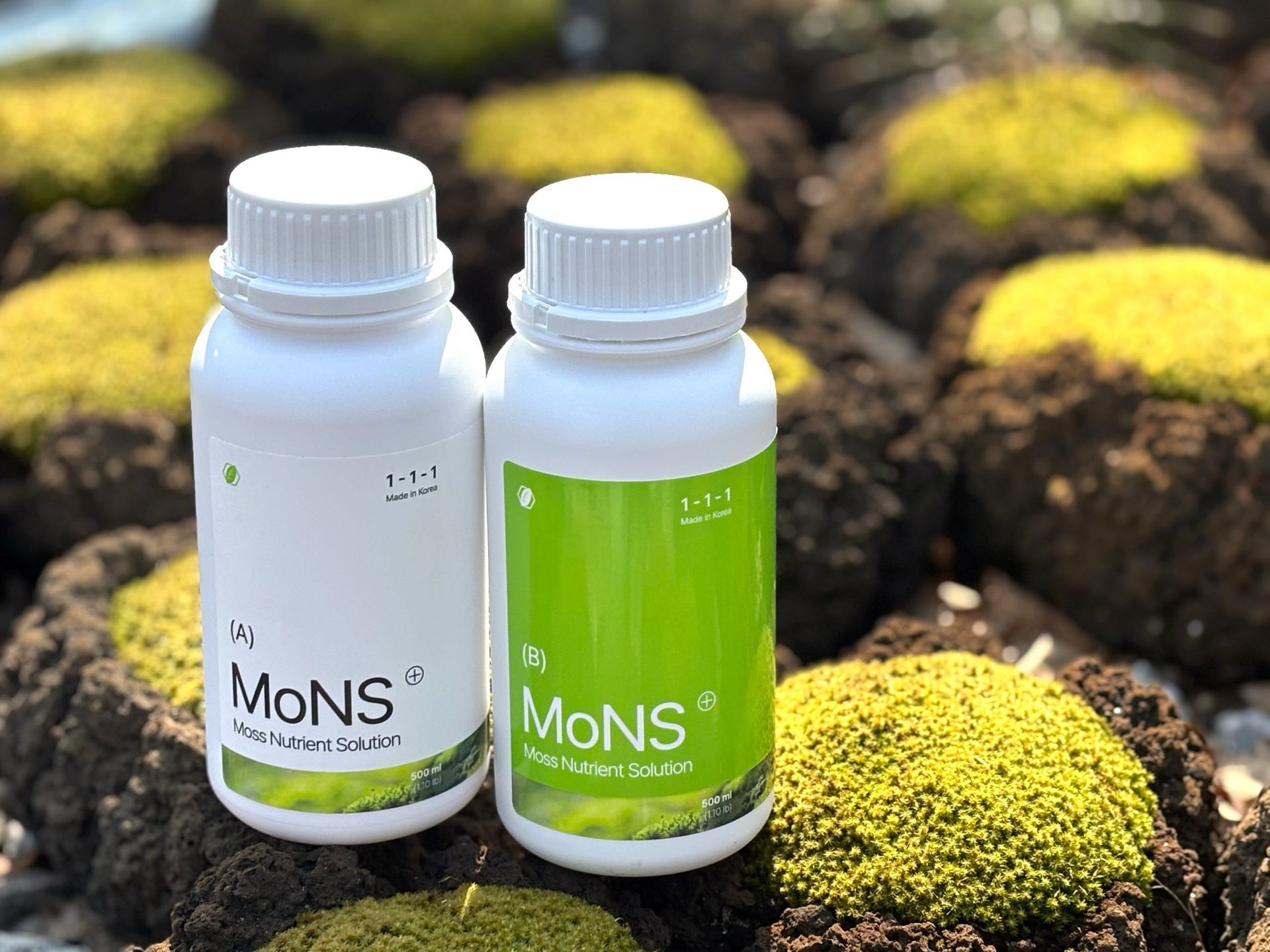
Alongside disease management, another challenge was creating the right conditions for moss to re-establish and recover steadily.
That's where MoNS came in — a moss-specific nutrient solution developed by Code of Nature. It's not designed to push rapid growth. It's designed around the biological needs and nutritional balance of moss, supporting stable establishment over time. Unlike general fertilizers, MoNS delivers only what moss actually needs.
Water & Art and other domestic moss farms are now applying MoNS as part of their active cultivation systems, tracking how moss establishes and grows. When disease response and nutritional management work together, the result is more consistent, higher-quality moss production.
What It Means to Work as a Field Partner
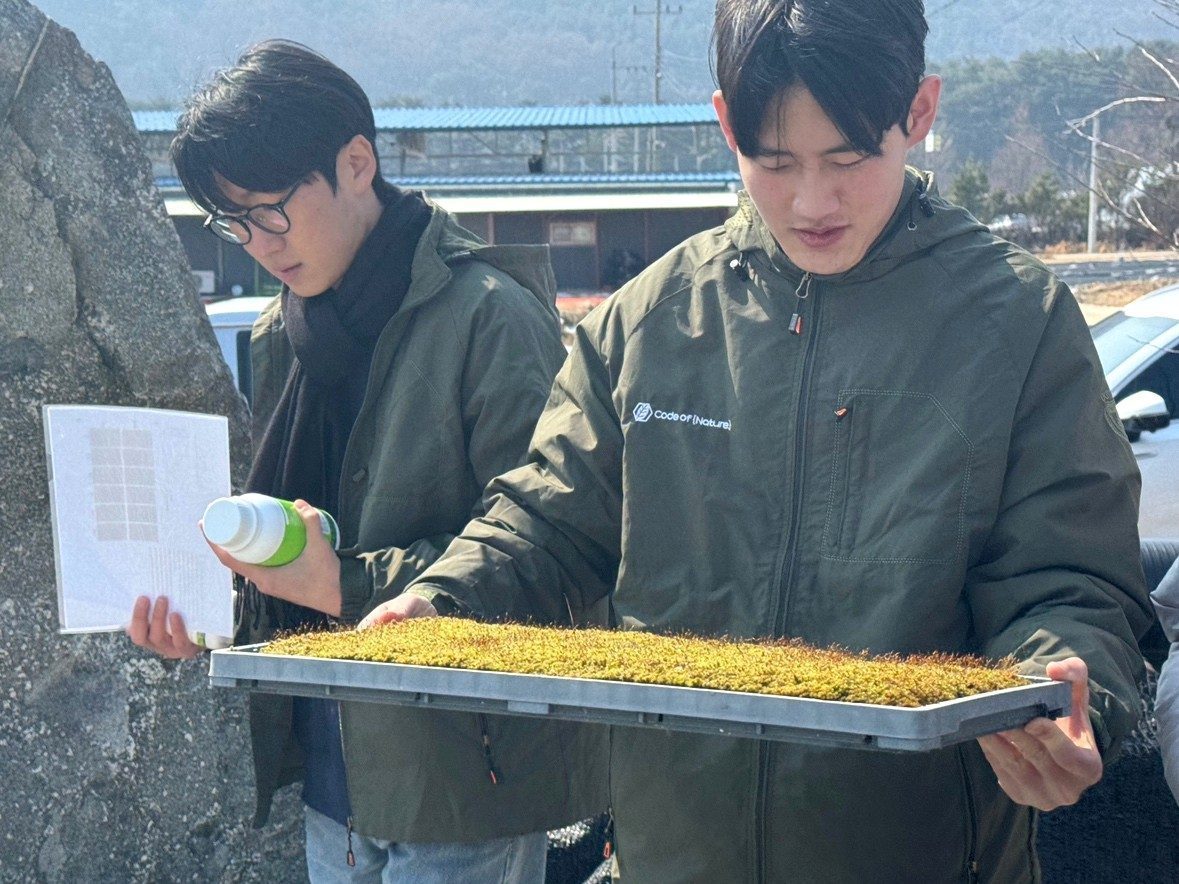
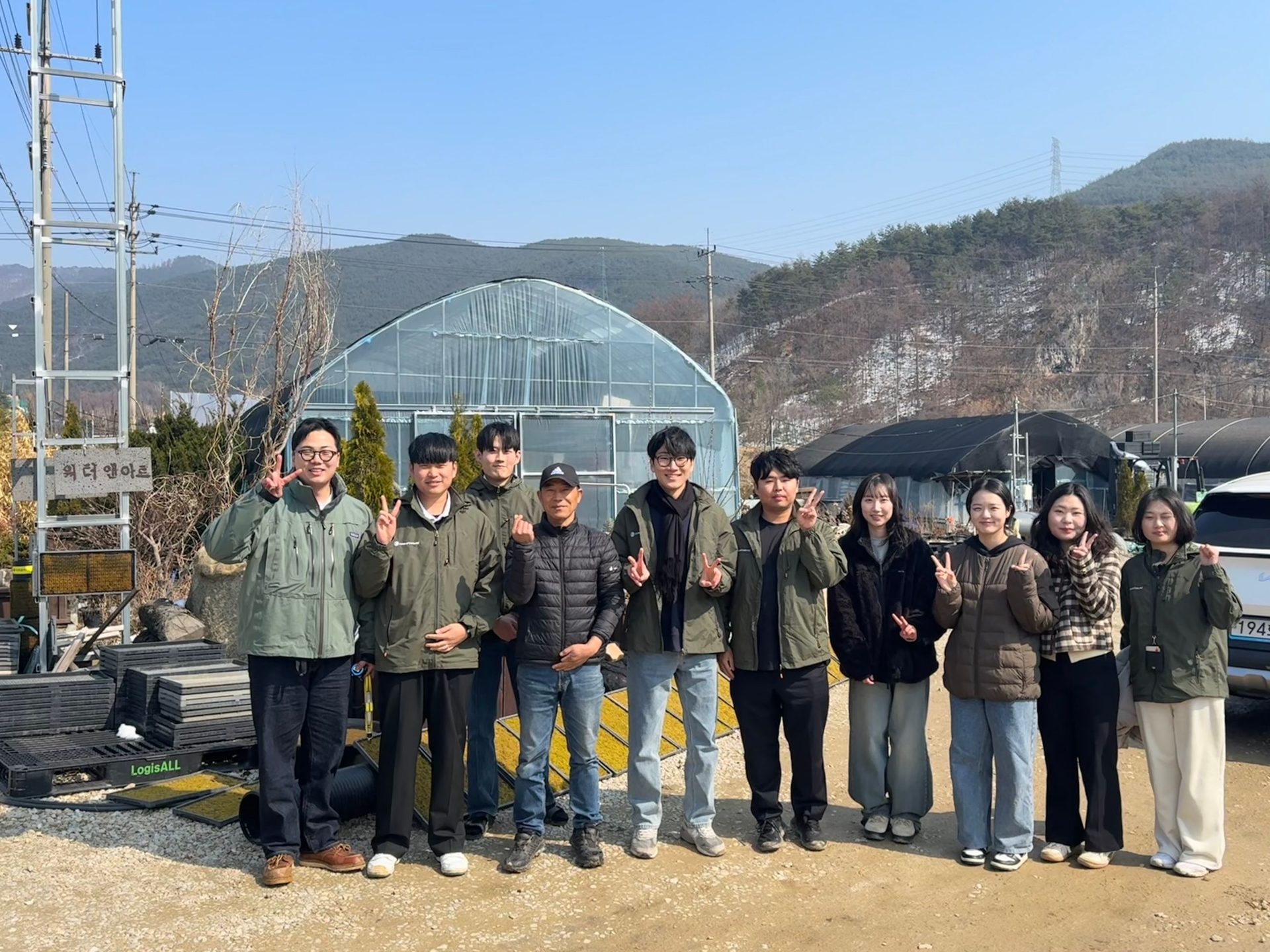
Water & Art representative and Code of Nature team
Leaving the farm, one thought stayed with us. Good restoration doesn't come from technology or products alone. It comes from listening to the people in the field, seeing things firsthand, working through problems together, and bringing the results back to where they're needed.
Problem discovery → Lab verification → Field application
For that cycle to actually work, you have to stay close to the field. Our collaboration with Water & Art was a reminder of that — and the partnership has continued well beyond that first visit.
We look forward to more farms, more fields, and more problems worth solving together.
Share this Insight
Recommended Content
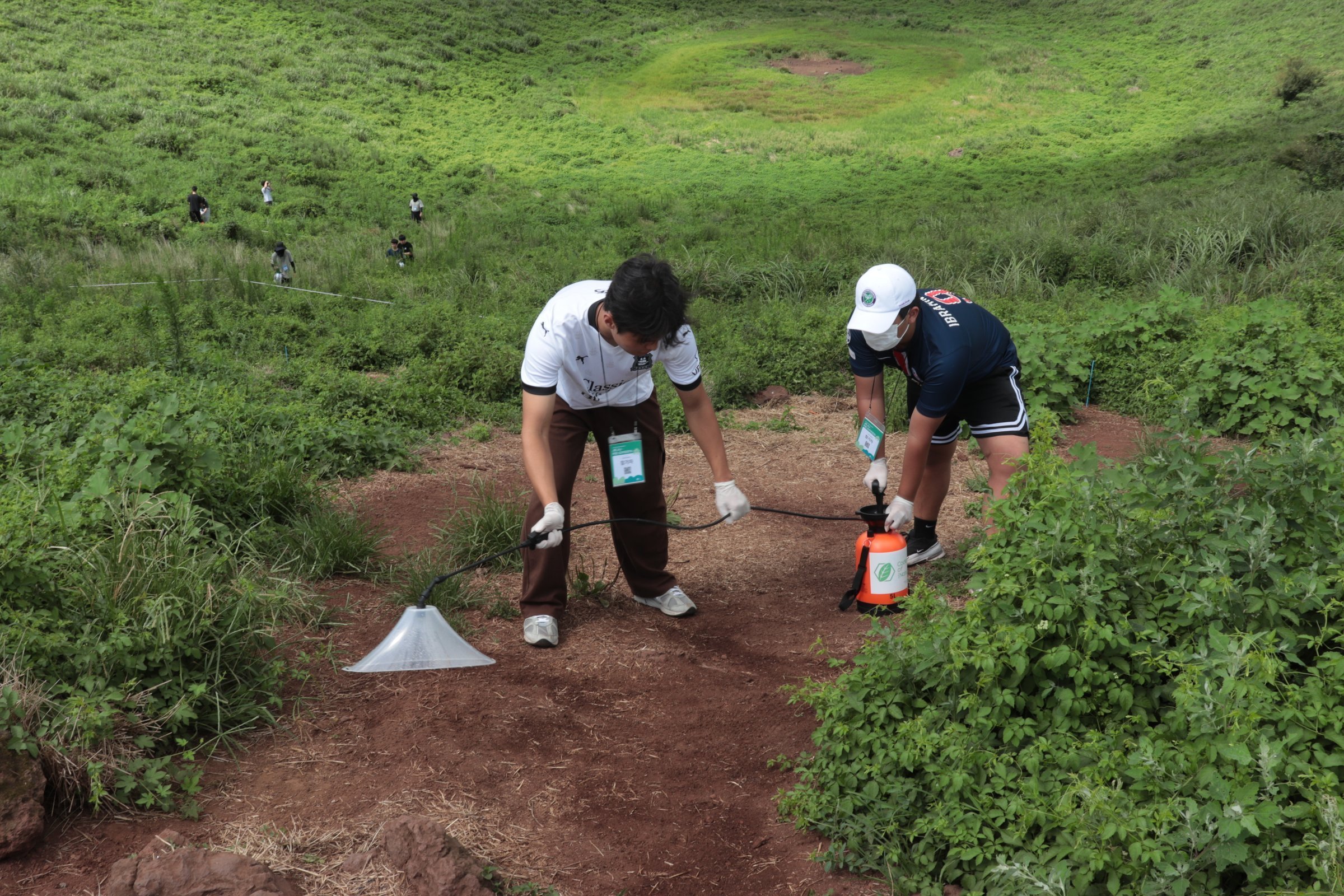
Corporate Giving, One Year Later: Restoring Volcanic Soil on Jeju Island
A community-led soil restoration project featured in AmorePacific's 2025 Sustainability Report
Collaboration
World Environment Day: Why Soil Health Matters for Ecosystem Restoration
The clue to ecosystem restoration may be right beneath us
Stories
The Tiny Lifeform NASA Took Notice Of: Moss, the Spacefaring Pioneer
NASA’s ARTEMOSS Experiment Sent Moss Into Space
Stories