
World Environment Day: Why Soil Health Matters for Ecosystem Restoration
When we think about environmental issues, what usually comes to mind?
Carbon reduction, renewable energy, plastic waste, tree planting, and more.
All of these matter. But there is one place we often overlook: the soil beneath our feet.
We walk on it every day, eat food grown from it, and build our lives on it. And yet, when we talk about the environment, soil is often left out of the conversation.
What if the soil we step on every day is one of the planet’s most important carbon stores? What if it is also the starting point for restoring damaged ecosystems?
Let’s take a closer look at the soil beneath our feet.
1. Soil Stores More Carbon Than We Think
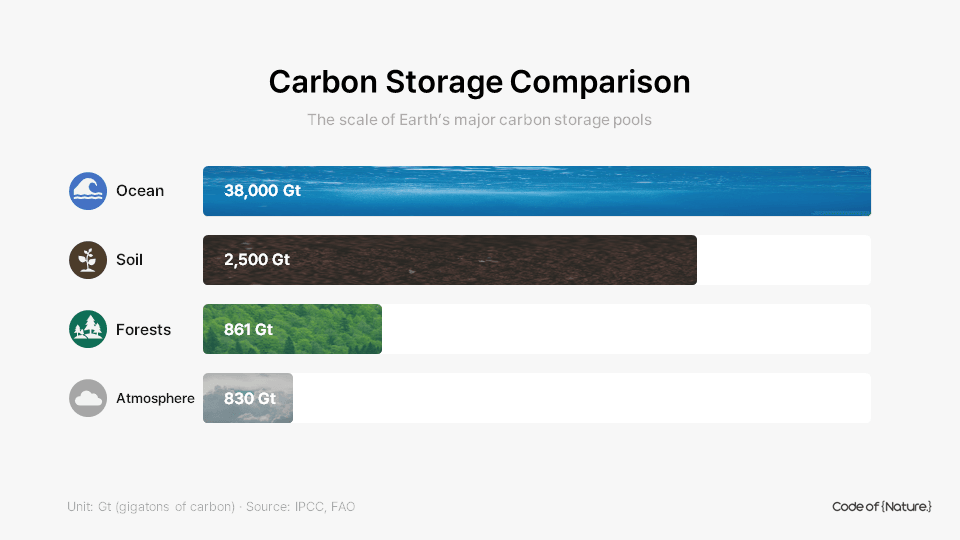
When we think of carbon stores, we often picture oceans or forests. But soil plays an important role as well.
Near-surface soil is known to store more carbon than the atmosphere and vegetation combined. In other words, there is far more carbon beneath our feet than we might imagine.
But soil does more than hold carbon. Beneath the surface, things are constantly happening beyond what we can see.
Even though it may look still from the outside, soil is a much busier world than we might think. A single teaspoon of healthy soil can contain more microorganisms than there are people on Earth.
These tiny forms of life break down organic matter, while fungi connect life underground and help nutrients move through the soil. On top of this quiet movement, plants are able to grow roots again.
2. Green on the Surface Does Not Always Mean Healthy Soil
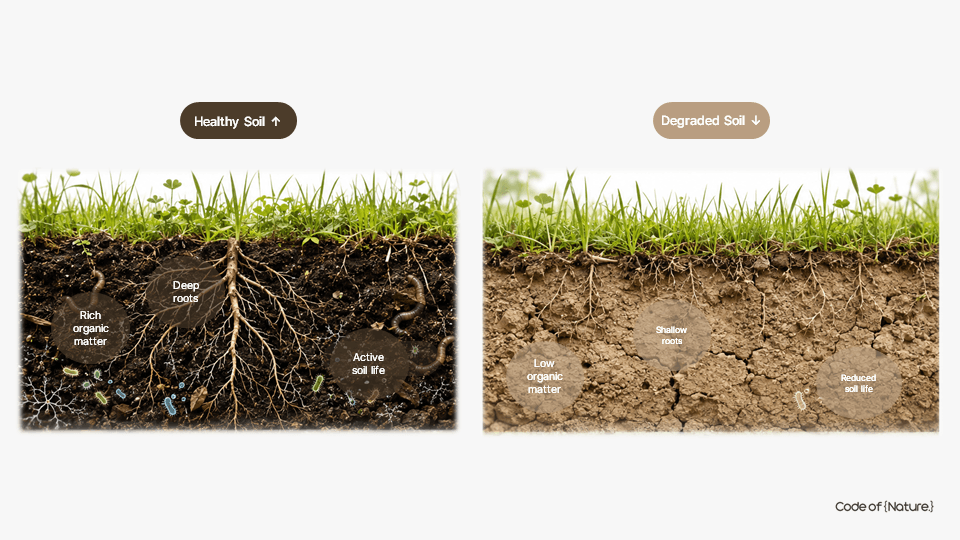
What comes to mind when you hear the words “land degradation”?
Cracked ground, dry desert, a landscape where nothing grows. These are all forms of degradation, but soil can decline in much quieter ways.
A place may still look green on the surface. Grass may be growing, and the land may seem fine at first glance. But beneath that surface, change may already be underway.
Organic matter may be decreasing, soil may be losing the pore spaces that allow air and water to move through it, and small organisms may be losing the places they need to live.
From a distance, these changes are hard to see. But roots notice first.
They struggle to grow deeper, dry out more easily, and have a harder time surviving over time. The soil’s ability to hold carbon can also weaken.
That is why land health cannot be judged by surface greenery alone. The real condition of the land is revealed below, in the soil.
3. When Soil Weakens, the Whole Ecosystem Becomes Vulnerable
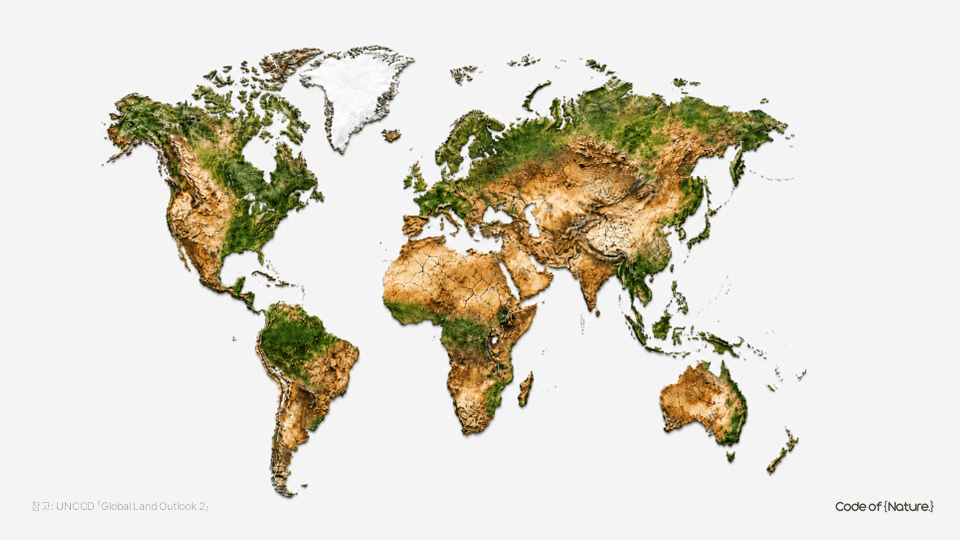
Changes in soil do not stay underground. What may seem like a small signal can affect biodiversity, climate resilience, and eventually the food we depend on.
It may look like only the soil is breaking down, but in reality, the entire web of life built on that soil begins to weaken. That is why land degradation is not simply a matter of damaged ground.
The problem is that many landscapes are already losing their ability to recover. According to the UNCCD’s Global Land Outlook 2, up to 40% of the world’s land is already degraded.
This number does not only tell us that a large amount of land has been damaged. It also means that in many places, ecosystems are losing the space and strength they need to recover on their own.
Restoration Begins Where We Cannot See It
Before green returns above the surface, the land must regain the strength to support life below it. That is why restoration often begins where we cannot easily see it.
When soil becomes capable of supporting life again, the landscape above it slowly begins to change.
This is why we need to talk about soil on World Environment Day. Restoring degraded land is not about covering the surface with green.
It is about rebuilding strength from below, so life can return and continue on its own.
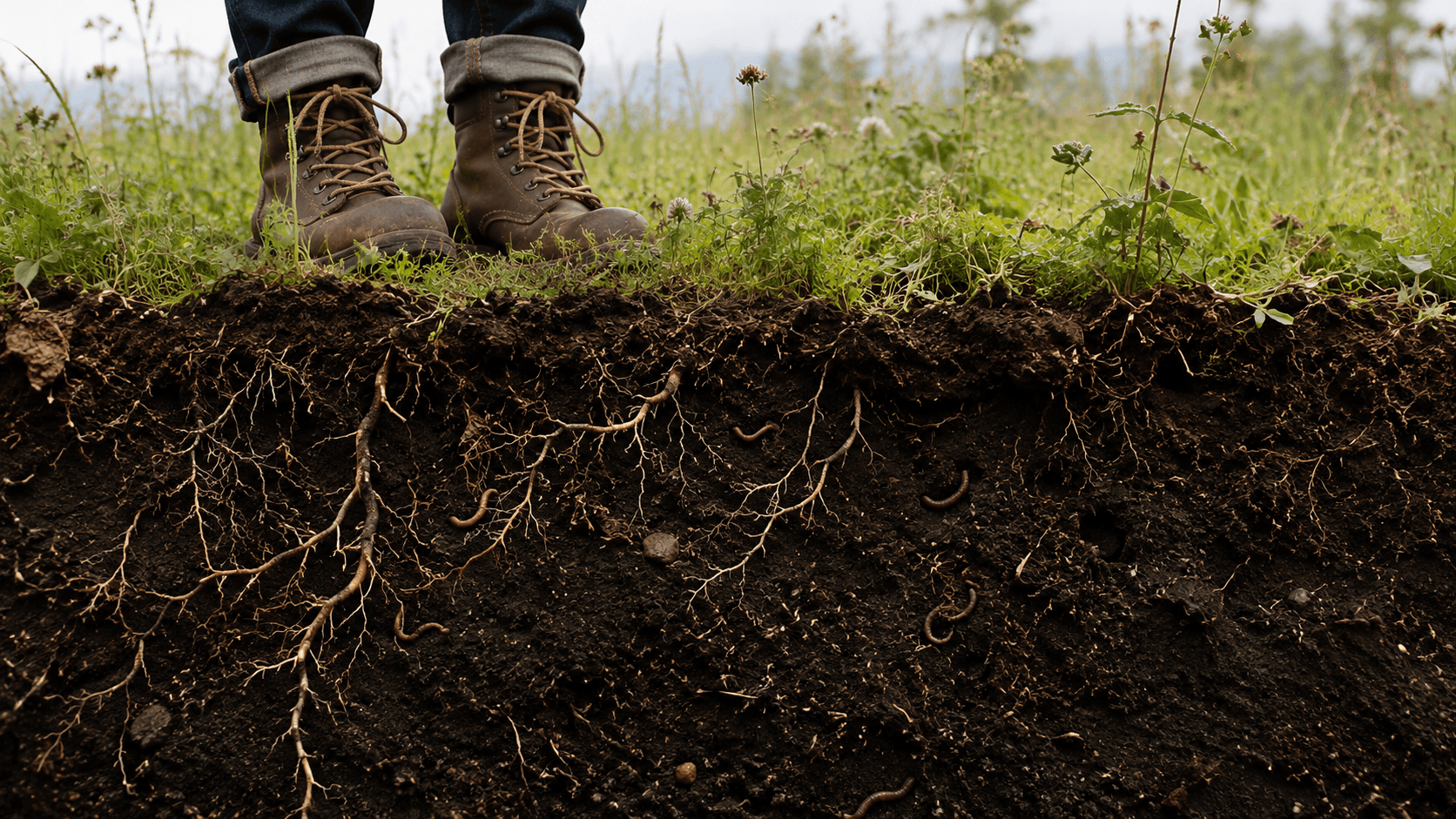
This World Environment Day, let’s look again at the soil beneath our feet.
Is the soil we stand on still capable of coming back to life?
And are we creating the conditions for that recovery to happen?
Perhaps environmental restoration begins with that question.
Share this Insight
Recommended Content
The Tiny Lifeform NASA Took Notice Of: Moss, the Spacefaring Pioneer
NASA’s ARTEMOSS Experiment Sent Moss Into Space
Stories
How Moss Became the Starting Point of Ecological Restoration
Before there were forests or even soil, moss opened the door to ecosystems.
Stories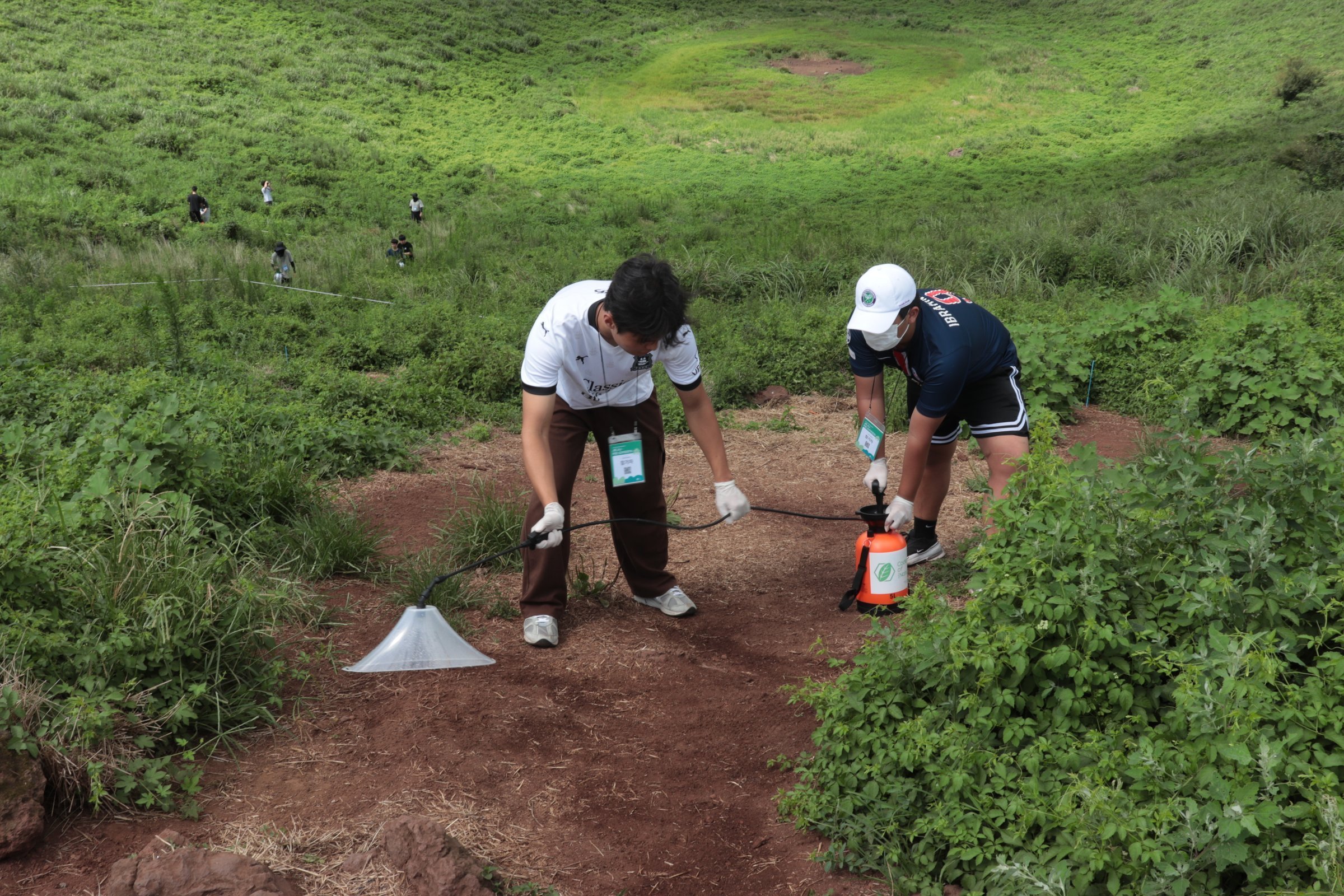
Corporate Giving, One Year Later: Restoring Volcanic Soil on Jeju Island
A community-led soil restoration project featured in AmorePacific's 2025 Sustainability Report
Collaboration