
Exploring Moss & Microbes for Lunar and Martian Soil Restoration
COFN Paper Review: Exploring Crop Growth in Lunar and Martian Soil
Could Farming Be Possible in Space?
What once seemed possible only in science fiction—humans living on the Moon or Mars while growing plants for survival—is no longer just imagination. Science has begun to offer real answers to that question, and the Code of Nature research team has joined that journey.
In September 2025, our researchers published a paper in the international journal Ecological Indicators titled “Moss-derived microbiome improves crop growth in lunar and Martian soil simulants.” This study does more than suggest the possibility of space agriculture. It provides experimental evidence that a solution for restoring degraded soil on Earth may also be extended into a strategy for survival beyond our planet.
Moss-derived microbiome improves crop growth in lunar and Martian soil simulants
The study, “Moss-derived microbiome improves crop growth in lunar and Martian soil simulants,” was published in Ecological Indicators in 2025. Its central goal was to determine whether moss and moss-derived microorganisms could improve soil conditions and promote crop growth in extreme environments such as lunar and Martian soil simulants. The experiment focused on moss (Hypnum plumaeforme), microorganisms including Pseudomonas monteilii and Bacillus cereus, and barley (Hordeum vulgare) as the test crop.
Research Background 1. Soil Degradation as a Global Crisis
One of the most serious environmental crises facing humanity today is soil degradation. Around 40% of the world’s soil is already degraded, and some projections suggest that by 2050, as much as 90% of global soil may become deteriorated. This is not simply an environmental issue. When soil collapses, food production declines, biodiversity decreases, and ecosystem services begin to fail. The economic consequences are equally severe, with global losses estimated at more than 10% of annual GDP.
Faced with this enormous challenge, scientists have increasingly turned their attention to moss, a small but resilient lifeform that has survived harsh environments for millions of years.
Research Background 2. Why Moss?
Moss is a primitive plant lineage that has existed on Earth for roughly 400 million years. Despite its simple structure and the absence of vascular tissue, it has managed to survive across a wide range of extreme environments. That resilience is exactly why moss is attracting renewed attention in restoration research today.
Moss plays several important ecological roles. It helps regulate moisture by maintaining micro-scale water circulation even in dry environments, creating conditions that allow other organisms to establish themselves. It also stabilizes soil by binding particles together, reducing erosion, and strengthening physical structure. In addition, moss works alongside symbiotic microorganisms to support nutrient cycling and to influence nitrogen and carbon dynamics within the soil.
In other words, moss is not simply a ground-covering plant. It can act as a catalyst for ecosystem recovery.
Research Background 3. The Challenge of Self-Sufficiency in Space
For humans to remain on the Moon or Mars over the long term, exploration alone is not enough. The real challenge is how to secure and cycle life-support resources such as food, oxygen, and water on site. Two key concepts are central to this problem: BLSS and ISRU.
BLSS, or Bio-regenerative Life Support Systems, refers to systems that use living organisms such as plants and microorganisms to regenerate and circulate essential resources. ISRU, or In-Situ Resource Utilization, refers to the strategy of relying on local resources on the Moon or Mars instead of transporting everything from Earth.
Recent studies point out that supplying all food from Earth during long-duration space missions or lunar and Martian habitation would be unrealistic in terms of logistics, cost, and time. That is why building local self-sustaining systems has become a critical task in space development.
The problem, however, is that actual lunar and Martian soils are not suitable for crop cultivation. Lunar and Martian soil simulants lack essential nutrients, making it difficult to grow crops without fertilizer or organic matter. Martian simulants are even more challenging due to their low organic matter content, high salinity, and elevated levels of heavy metals.
Because of these limitations, a new strategy was needed—one that could improve local soil conditions and make crop growth possible. This moss–microbe composite study was designed to explore that very possibility.
Experimental Design and Conditions
The research team used dried powder of H. plumaeforme together with microorganisms isolated from moss, including P. monteilii and B. cereus. Barley (H. vulgare) was selected as the test crop because it germinates quickly and adapts well to environmental stress, making it a suitable food resource for both Earth and space.
This experiment specifically used internationally validated lunar soil simulant (LHS) and Martian soil simulant (MGS). These two soils are standardized simulants also used by NASA and other international research institutions, as they closely reflect the physical and chemical properties of actual lunar and Martian soils.
The experimental design was as follows.
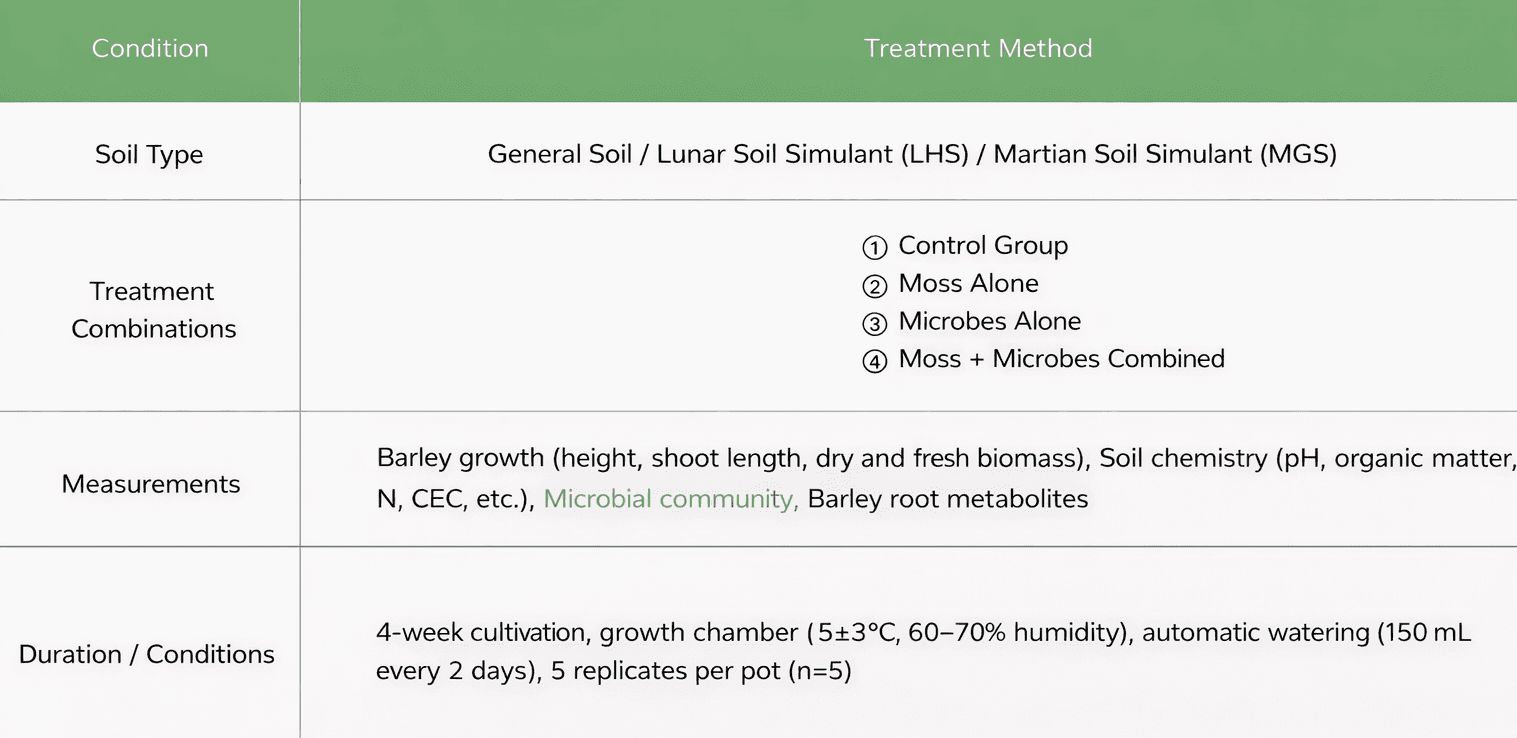
The core question of this study was not simply whether plants could grow. Rather, it aimed to examine how the interaction between moss and microorganisms could restore function in extreme soil environments.
Key Findings
1. General Soil
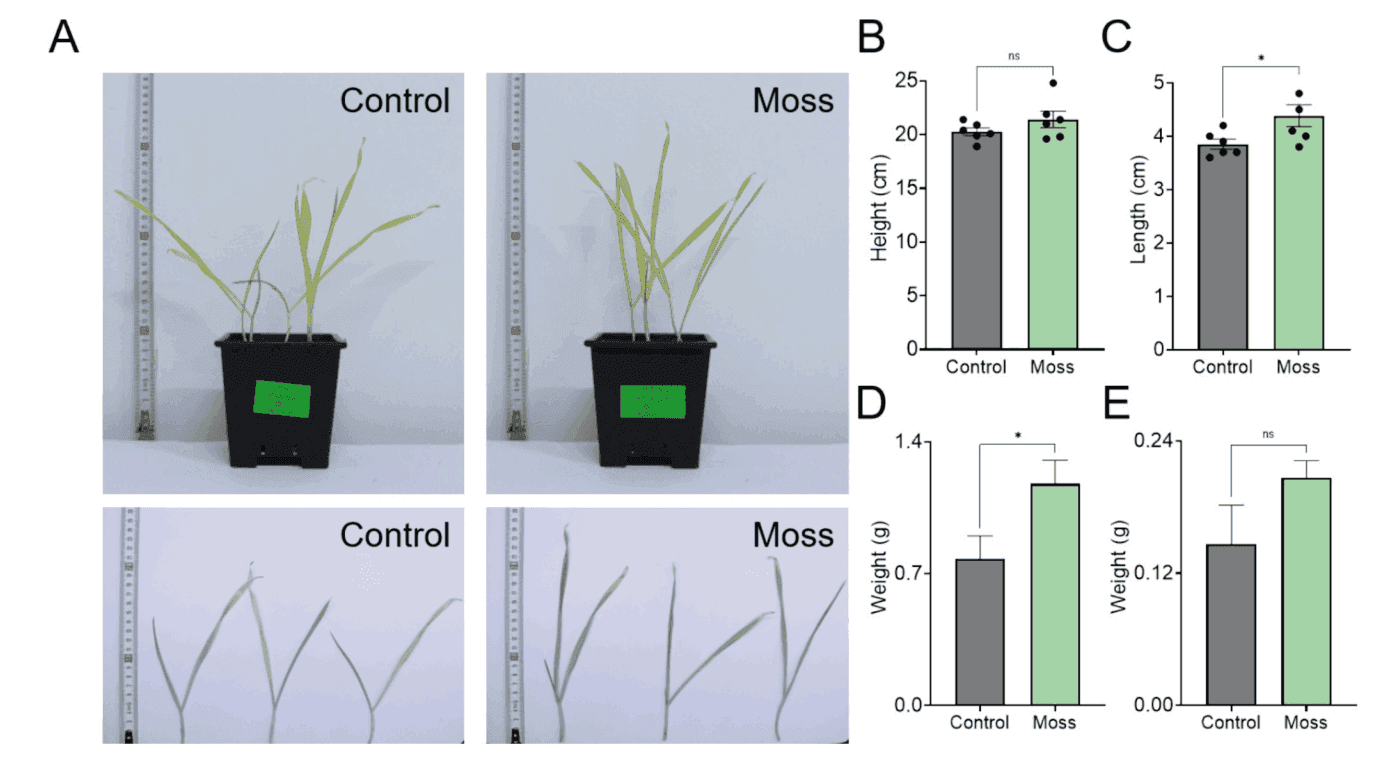
In general soil, moss treatment alone increased barley shoot growth and biomass. This suggests that even in relatively fertile conditions, moss can improve water and nutrient cycling and support plant growth.
2. Lunar Soil Simulant (LHS)
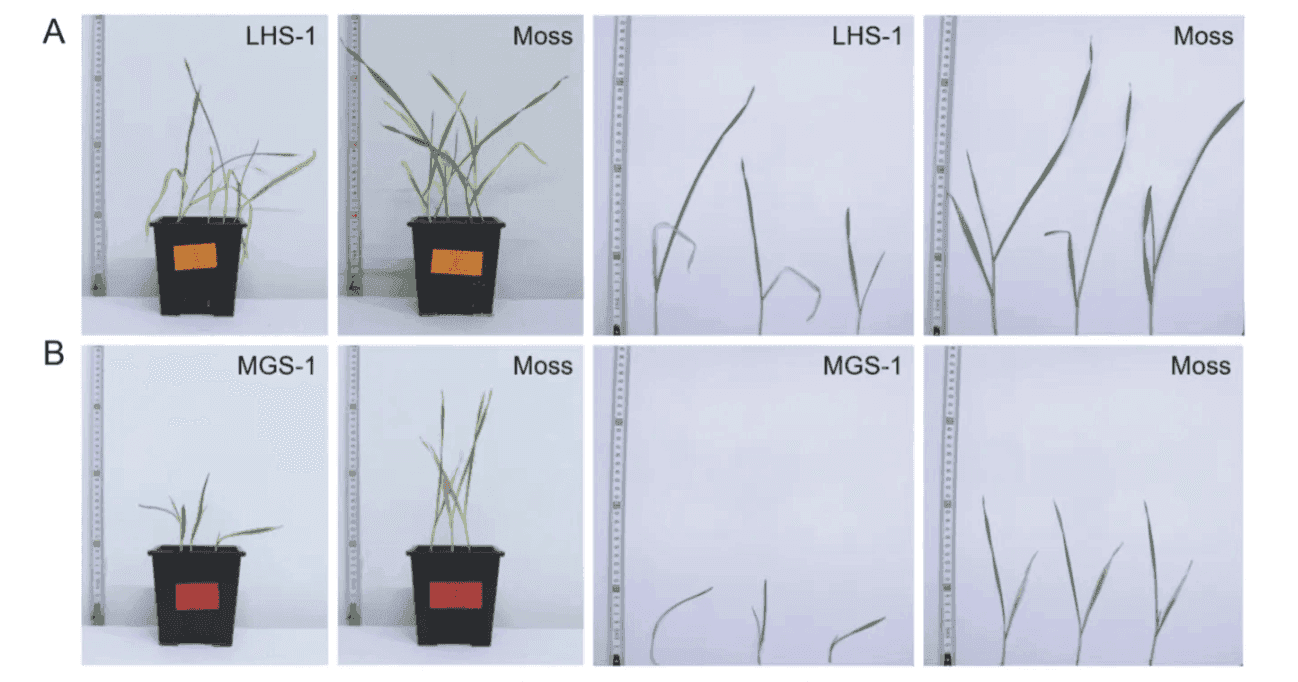
In lunar soil simulant, barley height, shoot length, and dry weight all increased significantly. The most pronounced improvement was observed when moss and microorganisms were applied together. This indicates that moss and microbes do not merely function in parallel; when combined, they can create a stronger recovery effect.
3. Martian Soil Simulant (MGS)
In Martian soil simulant, moss treatment alone improved several indicators of barley growth. By contrast, microorganisms alone showed limited effect. However, when combined with moss, plant growth recovery became much clearer. This suggests that moss may function as a biological buffer, helping microorganisms establish themselves and operate more effectively in hostile soil conditions.
4. Microbial and Metabolite Analysis
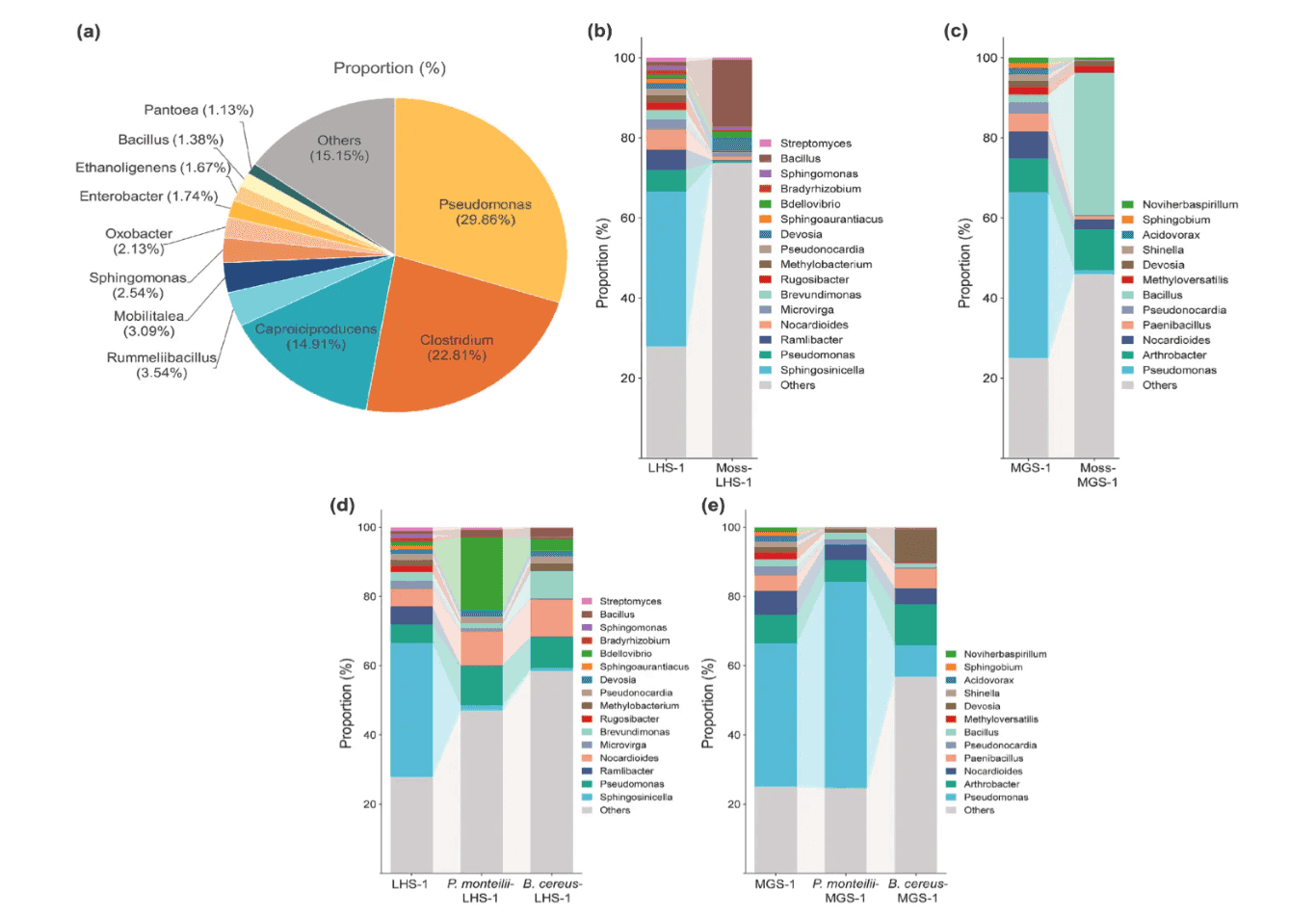
Microbial community analysis showed that beneficial bacteria such as Pseudomonas, Bacillus, and Devosia became more dominant in moss-treated soils.
Metabolite analysis revealed increased levels of D-ribose and D-gluconate across all conditions. These compounds are associated with nucleic acid synthesis and reductive metabolism, suggesting enhanced cell division and biomass accumulation. In Martian soil simulant in particular, UDP and L-cystine also increased, which may indicate stress defense responses and regulation of redox balance.
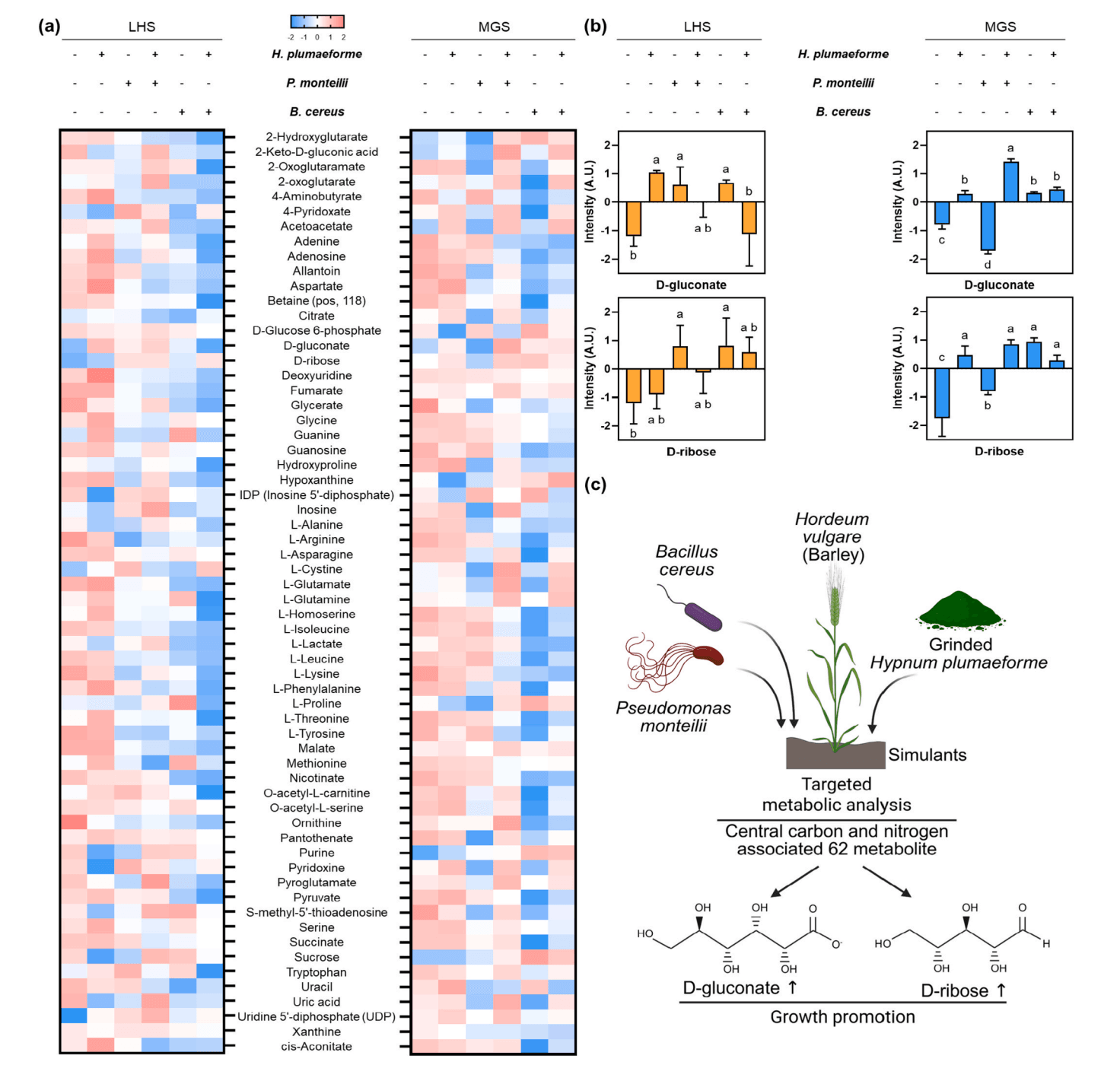
Taken together, these results show that moss does more than physically cover soil. It appears to regulate the soil microbial community itself, supporting plant growth-promoting rhizobacteria such as Pseudomonas and Bacillus, which in turn contribute to crop growth.
What Makes This Study Different
Many earlier studies focused mainly on the physical functions of moss, such as erosion control and moisture retention. This study goes further by experimentally demonstrating that a moss–microbe complex can influence not only crop growth but also cellular metabolic pathways.
Another important distinction is that these effects were validated in lunar and Martian soil simulants. This means the study extends beyond ecological restoration on Earth and opens the door to potential applications in space agriculture. In that sense, moss is not only a tool for restoring degraded soil, but also a clue to designing life-support foundations in extreme environments.
Why This Research Matters
This study carries important implications on four levels.
First, it shows how the interaction between moss and microorganisms can promote plant growth. Moss increased the activity of symbiotic microbes, enhanced nutrient availability in the soil, and supported the production of metabolites beneficial to barley growth.
Second, it presents a nature-based solution for restoring degraded soils on Earth. Moss and microorganisms can do more than simply cover the ground; they can serve as the starting point for restoring soil function itself.
Third, the findings suggest a meaningful agricultural application. A moss–microbe complex may reduce dependence on chemical fertilizers while still supporting crop growth, pointing to the possibility of an eco-friendly biofertilizer strategy for sustainable agriculture.
Fourth, the study points toward future applications in space agriculture. By addressing limitations faced by BLSS and ISRU systems, it suggests a more realistic direction for building food self-sufficiency systems on the Moon and Mars.
Ultimately, this research shows that restoring degraded soils on Earth and preparing for humanity’s expansion into space may not be separate challenges after all.
What This Means for COFN
Code of Nature is often asked, “Why moss?” This study offers a scientific answer.
Moss is the starting point of ecosystem recovery. It helps revive soil and creates the conditions in which microorganisms can establish themselves. That role aligns directly with the philosophy behind COFN’s work.
The microbial strains that COFN focuses on—COFN005 and COFN006—also point in the same direction. Like Pseudomonas and Bacillus, they represent key biological partners in soil recovery and crop growth. And field-based examples such as the Jeju Oreum restoration project show how these scientific findings can connect directly to real ecological restoration strategies.
Our belief is simple: small moss can help restore vast ecosystems. That is why Code of Nature remains deeply committed to moss.
Share this Insight
Recommended Content
Corporate Giving, One Year Later: Restoring Volcanic Soil on Jeju Island
A community-led soil restoration project featured in AmorePacific's 2025 Sustainability Report
Collaboration
World Environment Day: Why Soil Health Matters for Ecosystem Restoration
The clue to ecosystem restoration may be right beneath us
Stories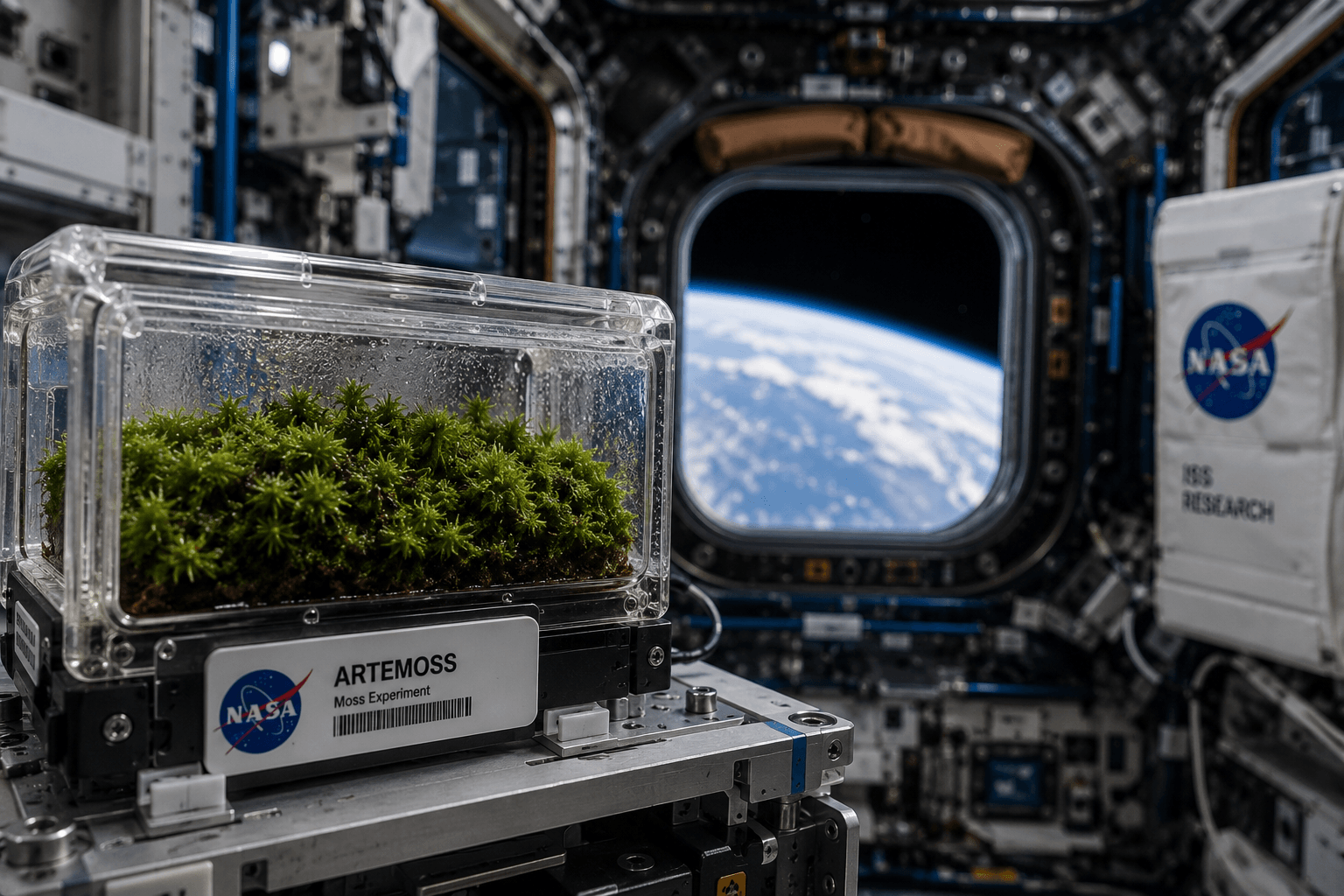
The Tiny Lifeform NASA Took Notice Of: Moss, the Spacefaring Pioneer
NASA’s ARTEMOSS Experiment Sent Moss Into Space
Stories